Defining the private stablecoin landscape
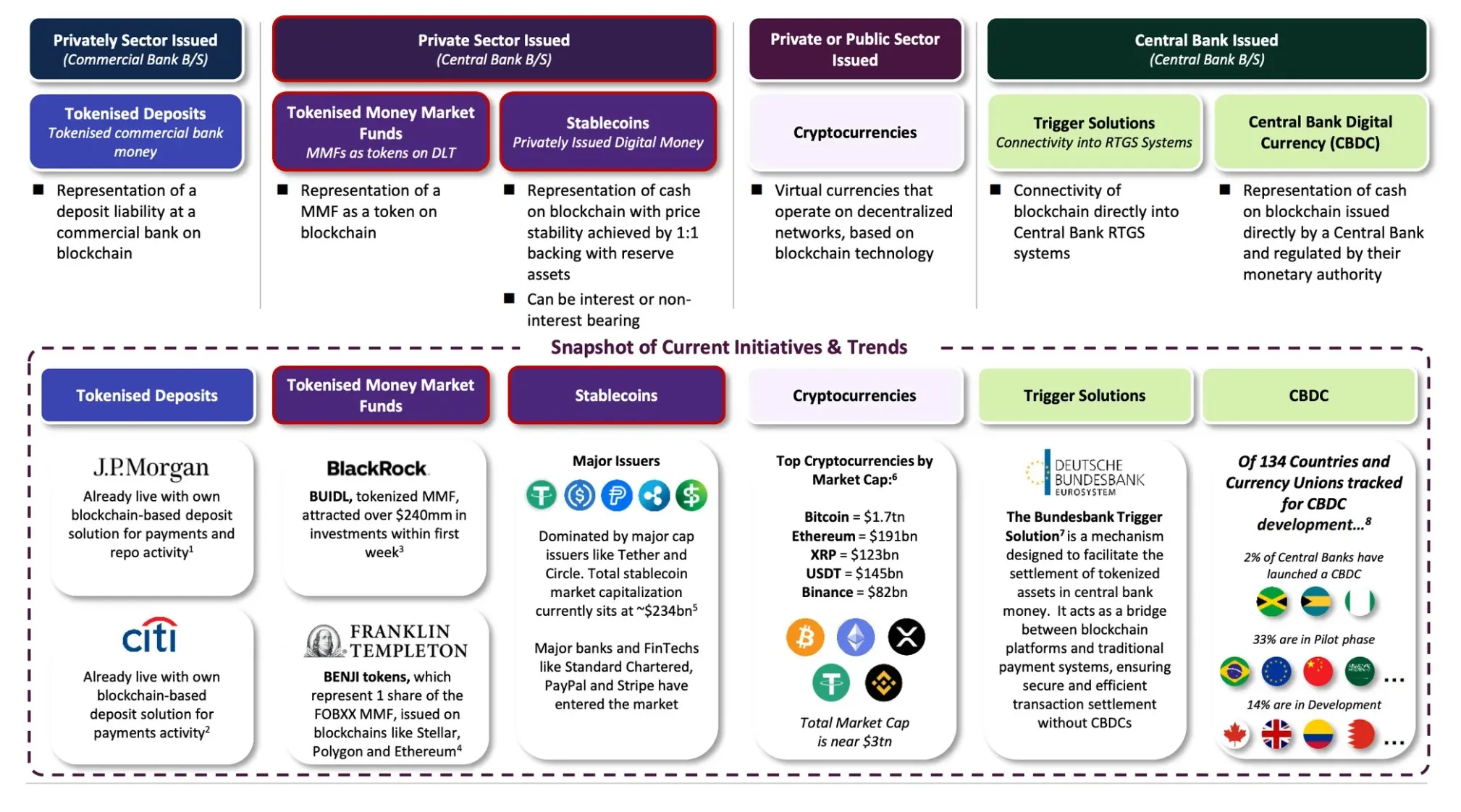
Stablecoins have evolved into more than just a retail trading tool. While public stablecoins like USDT and USDC serve as the "cash" for on-chain trading and cross-border payments, a distinct category has emerged for institutional use: private, permissioned stablecoins. This distinction matters because the infrastructure required for enterprise treasury management differs fundamentally from public market liquidity.
Public retail stablecoins prioritize speed and accessibility, often operating on public blockchains where transaction history is visible to all. In contrast, private stablecoins are designed for controlled environments. They allow enterprises to optimize liquidity and settle foreign exchange (FX) operations in real-time while maintaining strict control and visibility over who holds the asset and how it moves. This permissioned structure aligns better with traditional banking compliance standards, where data privacy and counterparty verification are non-negotiable.
The shift toward private stablecoins reflects a broader trend in digital asset infrastructure. Rather than treating crypto assets solely as speculative instruments, institutions are building internal rails for value transfer. These systems offer the efficiency of blockchain settlement without exposing sensitive corporate financial data to the public ledger. As regulatory frameworks mature, the ability to segregate private, permissioned assets from public markets will likely become a standard requirement for large-scale corporate adoption.
Core infrastructure requirements
Building a private stablecoin requires more than just a token contract; it demands a robust technical stack that balances public blockchain transparency with private enterprise controls. The infrastructure must support high-throughput settlement while ensuring that sensitive transaction data remains visible only to authorized participants. This architecture typically revolves around three pillars: the choice of ledger, the security of smart contracts, and the reliability of oracle integration.
Ledger selection and smart contract security
The foundation of any private stablecoin is the ledger itself. While public chains offer liquidity, private or permissioned ledgers like Canton provide the necessary privacy for institutional use cases. Enterprises can optimize liquidity and settle foreign exchange transactions in real-time, maintaining strict control and visibility over treasury operations without exposing data to the broader public.
Smart contracts on these ledgers must be rigorously audited. Security is not an afterthought but a core requirement. The code must handle minting, burning, and transfer logic with zero tolerance for vulnerabilities. Any flaw in the contract can lead to irreversible losses, making formal verification and third-party audits non-negotiable steps in the development process.
Oracle integration and data feeds
Private stablecoins often need to peg to real-world assets or exchange rates, requiring reliable oracle integration. Oracles bridge the gap between on-chain smart contracts and off-chain data. For a private stablecoin, this means integrating with trusted data sources that can verify asset reserves or FX rates without compromising privacy. The oracle must be resilient against manipulation, ensuring that the stablecoin’s value remains accurate and stable under market stress.

Compliance and access controls
Beyond the code, the infrastructure must enforce strict access controls. This includes integrating KYC/AML checks directly into the protocol layer. Only verified users should be able to hold or transfer the stablecoin, ensuring regulatory compliance from the ground up. This approach allows enterprises to participate in the digital asset economy while adhering to legal requirements.
The technical stack for private stablecoins is complex, but the payoff is significant. By combining secure ledgers, audited contracts, and reliable oracles, businesses can unlock new efficiencies in cross-border payments and treasury management. This infrastructure forms the backbone of a trusted, private digital currency ecosystem.
Navigating regulatory compliance
Private stablecoins operate in a high-stakes legal environment where the margin for error is effectively zero. If you are building or holding these instruments, you are not just managing liquidity; you are managing legal exposure. The framework is not yet fully codified in many jurisdictions, but the trajectory is clear: regulators demand transparency, segregation of assets, and independent verification.
Reserve requirements and auditing
The baseline expectation from regulators like the U.S. Securities and Exchange Commission (SEC) is 100% reserve backing. This is not a suggestion. Your reserves must be held in segregated accounts, managed daily, and subject to monthly attestations by independent third parties.
Without these audits, your stablecoin is just an unregulated IOU. The Treasury Department’s recent reports highlight that private entities face unique risks when these coins are used for secondary market trading or lending. If your reserve assets are tied up or illiquid, you trigger a redemption crisis. The goal is simple: prove that every token in circulation is backed by a dollar (or equivalent asset) that is immediately available.
Jurisdictional risks
Regulation is not uniform. A stablecoin compliant in one jurisdiction may be illegal in another. This fragmentation creates operational headaches. You must map your issuance entity to the specific banking and financial laws of your target markets.
Ignoring this leads to frozen assets or cease-and-desist orders. The SEC framework emphasizes that stablecoins used for trading or lending are not just payment instruments; they are securities-adjacent products. This classification invites scrutiny from multiple agencies. Plan your legal structure to survive the worst-case regulatory interpretation, not just the best-case scenario.
Market dynamics and settlement strategy
Private stablecoins operate differently from public counterparts, prioritizing controlled liquidity and institutional-grade settlement over open market speculation. The value lies in how these assets move through closed ecosystems, reducing friction for cross-border payments and treasury operations. Understanding these mechanics is essential for high-stakes financial decisions.
Liquidity and FX settlement
Liquidity in private stablecoin networks is often managed through dedicated pools or pre-funded accounts rather than decentralized exchanges. This structure allows for predictable settlement times and reduced slippage, which is critical for institutional FX transactions. Enterprises can optimize liquidity by keeping stablecoin reserves within their own controlled infrastructure, ensuring that funds are available for immediate deployment without relying on external market depth.
Settlement happens in real-time, bypassing the traditional correspondent banking delays. This immediacy reduces counterparty risk and frees up capital that would otherwise be tied up in pre-funding arrangements. The result is a more efficient use of working capital, particularly for organizations managing multi-currency balances.
Treasury management benefits
Holding stablecoins on a private ledger offers granular visibility into cash positions. Unlike traditional bank accounts where funds might be commingled, private stablecoins allow for distinct tracking of assets by purpose or counterparty. This transparency simplifies reconciliation and audit processes, providing finance teams with a clear, real-time view of their digital assets.
The ability to program logic into the stablecoin layer further enhances treasury management. Automated compliance checks, spending limits, and approval workflows can be embedded directly into the asset, ensuring that every transaction adheres to internal policies before it settles.

Comparison of settlement models
The table below contrasts private stablecoin settlement with traditional methods, highlighting the efficiency gains in speed and cost.
| Metric | Traditional Banking | Private Stablecoin |
|---|---|---|
| Settlement Time | 1-3 business days | Seconds to minutes |
| Counterparty Risk | High (intermediaries) | Low (direct settlement) |
| Cost per Transaction | $15-$50+ | < $0.01 |
| Visibility | Limited (batched) | Real-time & granular |
Market context
While private stablecoins focus on specific institutional needs, the broader stablecoin market provides context for liquidity trends. The following chart illustrates the price stability and trading volume of major stablecoins, demonstrating the underlying infrastructure's resilience.
The stability of these assets is a prerequisite for private network adoption. Any deviation from the peg can introduce settlement risk, making the choice of issuer and infrastructure critical. Private stablecoins mitigate this by allowing issuers to maintain strict reserve backing and control over the token's lifecycle.
Implementation checklist for enterprises
Launching a private stablecoin requires more than just minting tokens; it demands a rigorous operational framework. Enterprises must align technical infrastructure with strict regulatory compliance before moving funds. This workflow ensures your deployment is secure, auditable, and legally sound.
Identify the specific use case (e.g., B2B payments, treasury management) and the primary jurisdictions where tokens will circulate. Engage legal counsel early to map these activities against local anti-money laundering (AML) and know-your-customer (KYC) requirements. This step prevents costly pivots later in the development cycle.
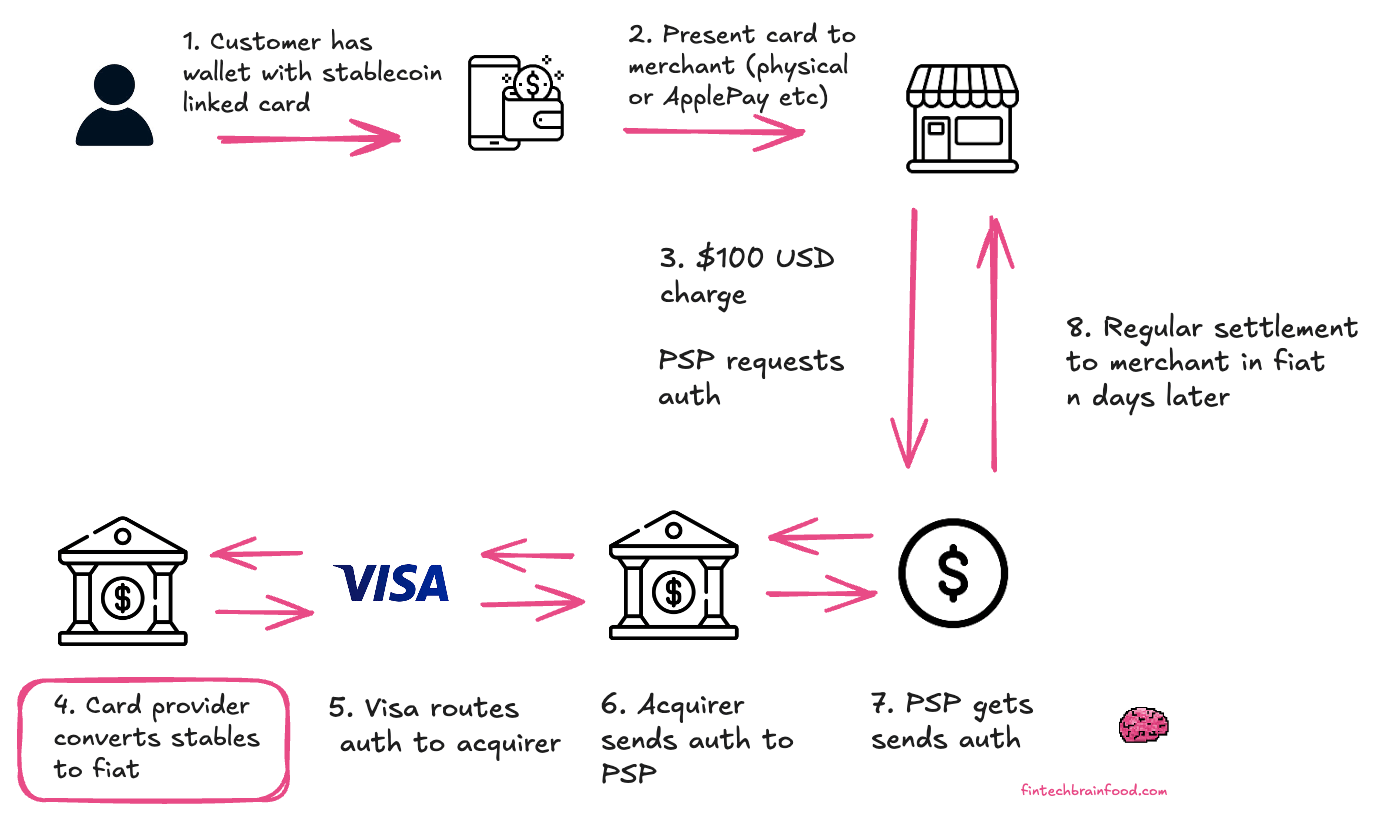
Choose a backend provider that offers institutional-grade custody, automated compliance screening, and seamless fiat on-ramps. Providers like Stripe offer specialized guides on integrating this infrastructure, ensuring your technical stack supports real-time settlement without compromising security. Evaluate their audit trails and incident response protocols carefully.
Define how fiat or equivalent assets back your stablecoin. Implement daily reconciliation processes and engage a third-party auditor to verify reserves. Transparency is critical for enterprise trust; automated reporting tools should generate proof of reserves that stakeholders can verify in real-time.
Before mainnet launch, execute comprehensive penetration testing and formal verification of your smart contracts. Ensure your contracts support essential features like pausing functions for regulatory compliance and upgrading mechanisms for future improvements. Testnet simulations should mirror production volume to stress-test the system.
Begin with a limited pilot program involving trusted partners. Monitor transaction volumes, reserve ratios, and compliance flags closely. Establish a feedback loop to address any technical glitches or regulatory questions immediately before scaling to broader enterprise adoption.
Frequently asked: what to check next
Helpful gear
Use these product recommendations as a starting point, then choose the size, material, and price point that fit how you actually use the gear.



As an Amazon Associate, we may earn from qualifying purchases.
No comments yet. Be the first to share your thoughts!