Why private stablecoins matter now
For years, enterprise settlement has faced a binary choice: use slow, expensive traditional banking rails or plan around the public transparency of open blockchains. Neither option fully serves the needs of large-scale financial institutions. Private stablecoin infrastructure bridges this gap by allowing institutions to leverage the speed and programmability of blockchain technology without exposing sensitive counterparty data, trading strategies, or pricing information to the public ledger.
The shift toward private, permissioned rails is driven primarily by two factors: privacy and compliance. Public stablecoins, while innovative, broadcast transaction details to everyone. For a bank moving millions in cross-border payments, this level of visibility is a security risk and a compliance liability. Private stablecoins solve this by keeping transaction data visible only to authorized participants, ensuring that commercial secrets remain secret while still benefiting from blockchain efficiency.
As noted by industry leaders like Barclays and Canton Network, this new generation of financial infrastructure is not just about digitizing fiat; it is about creating a parallel, private layer for value transfer. This allows institutions to maintain counterparty privacy while leveraging public blockchain efficiency, effectively creating a "dark pool" for stablecoin settlements that operates with the speed of crypto but the discretion of traditional finance.
This architectural shift is critical for enterprise adoption. It enables the kind of high-volume, high-value settlements that define global commerce, without the regulatory and competitive risks associated with public transparency. By keeping the ledger private, enterprises can finally use stablecoins for their core treasury and settlement operations, rather than just for speculative trading.
Mapping the six infrastructure layers
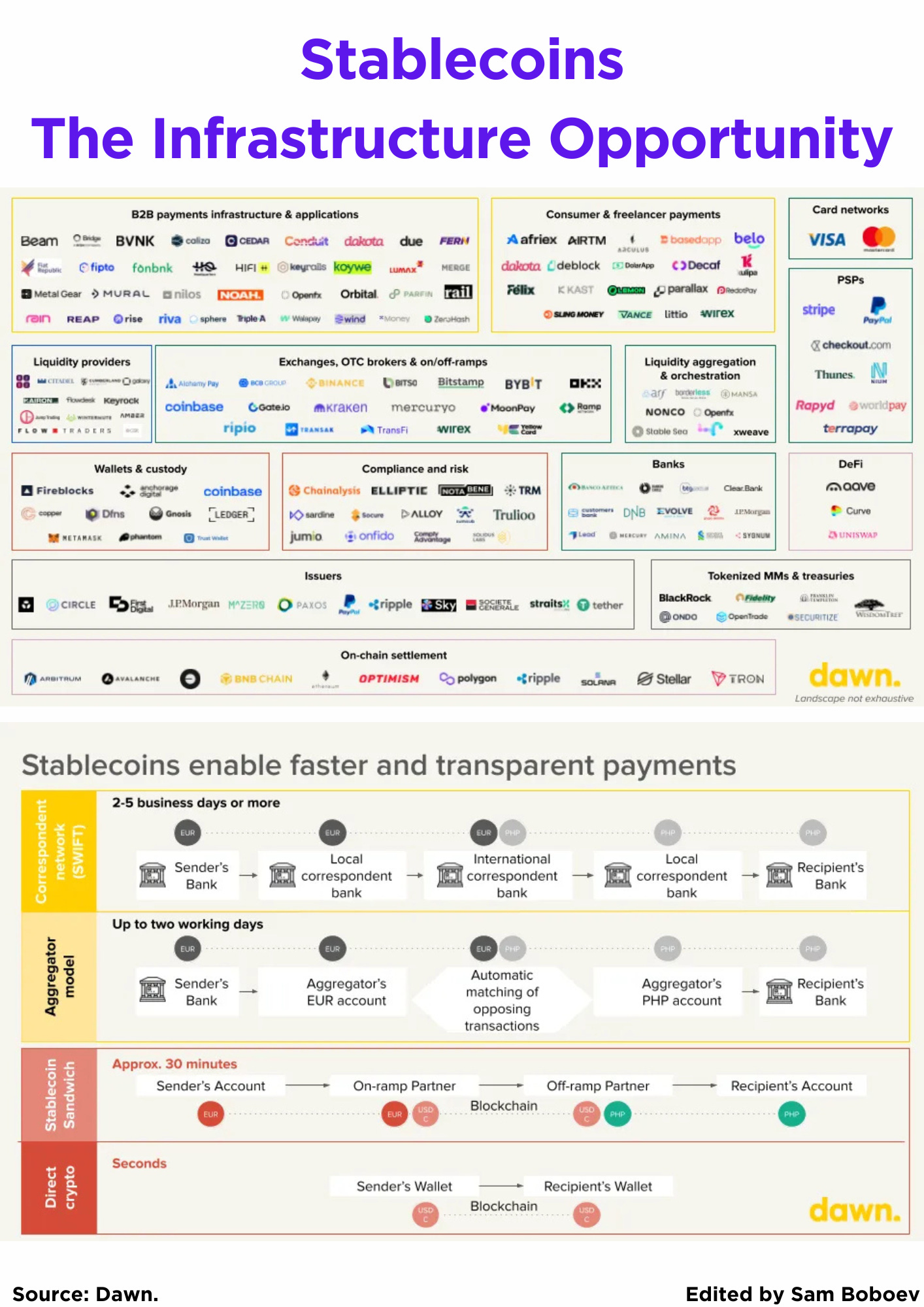
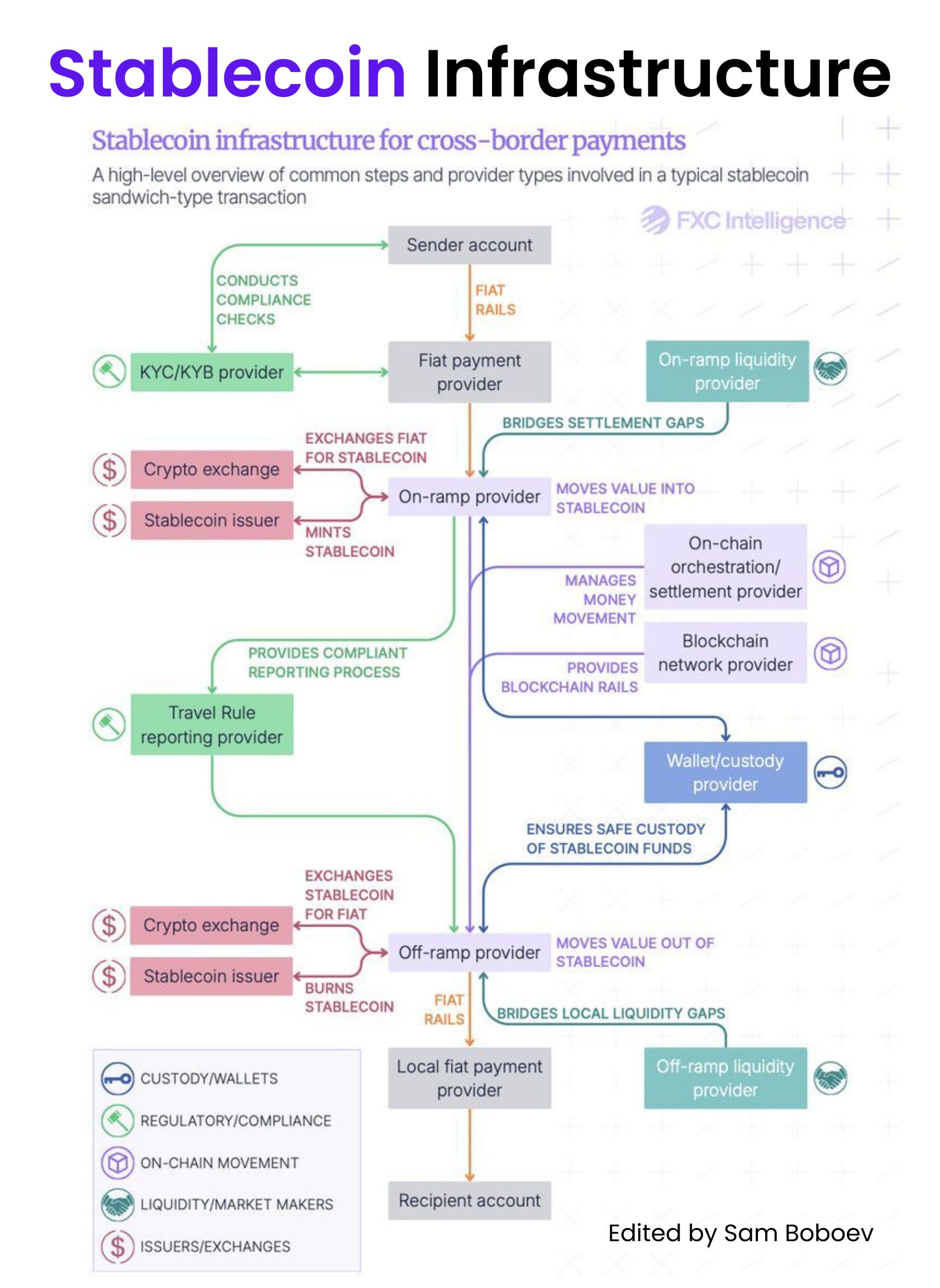
Building private stablecoin infrastructure requires a clear view of the technical stack. It is not just about issuing tokens; it is about connecting them to the real world. As Paxos outlines, stablecoin payments touch licensing, identity, custody, settlement, conversion, and distribution. Each layer must be robust enough to handle enterprise-grade volume and compliance.
Think of this stack as a pipeline. Money enters at the bottom and moves up through verification, storage, and finally, distribution. If one layer fails, the entire flow stops. For enterprise settlement, this means you cannot treat blockchain as a black box. You need to know exactly how identity is verified, where keys are held, and how fiat converts to tokens.

The first layer is Issuance and Redemption. This is where fiat meets crypto. It requires a licensed sponsor bank and a reserve management system that proves 1:1 backing in real-time. Without this, you have no asset, only code.
Next is Identity and Compliance. Private stablecoins are not anonymous. This layer integrates KYC/AML checks directly into the wallet onboarding process. It ensures that only verified entities can hold or move funds, satisfying regulatory requirements before the first transaction occurs.
Custody is the third layer. It involves securing the private keys that control the assets. Enterprise solutions often use multi-party computation (MPC) or hardware security modules (HSMs) to prevent single points of failure. The goal is institutional-grade security that rivals traditional banking vaults.
Settlement is the core blockchain activity. This layer handles the actual transfer of tokens on the ledger. For enterprise use, this often means using a permissioned chain or a high-throughput public chain with finality guarantees. The focus here is speed, cost, and immutability.
Conversion allows tokens to move between different currencies or assets. This layer manages liquidity pools and exchange rates, ensuring that a business can swap stablecoins for other currencies or fiat without significant slippage or delay.
Finally, Distribution delivers the funds to the end user. This includes APIs, wallets, and payment gateways that integrate with existing enterprise systems like ERP or payroll software. The user should never know they are using a stablecoin; it should feel like a standard bank transfer.
Choosing the right blockchain substrate
The foundation of your private stablecoin infrastructure dictates how much operational friction you absorb versus how much market visibility you surrender. Public chains like Ethereum offer unparalleled liquidity and composability, but they broadcast every transaction to the world. For enterprise settlement, this transparency can be a liability, exposing counterparty identities and trading strategies to competitors. Conversely, permissioned or private blockchains offer the institutional privacy required for high-stakes finance, though they often sacrifice the deep liquidity pools found on public networks.
The decision often comes down to whether your priority is seamless interoperability with the broader crypto economy or strict regulatory and commercial confidentiality. Some institutions opt for a hybrid approach, issuing stablecoins on public chains but utilizing privacy-preserving layers or zero-knowledge proofs to shield transaction details while maintaining auditability. Others build entirely on permissioned ledgers like Hyperledger or Canton Network, where participants are known and transactions remain visible only to authorized parties. This choice impacts everything from onboarding speed to the cost of compliance reporting.
Use the comparison below to evaluate how different substrate types handle the core requirements of enterprise settlement. The trade-offs are rarely neutral; gaining privacy usually means stepping away from the open, 24/7 settlement rails that define public stablecoin utility.
| Feature | Public Blockchain | Permissioned/Private |
|---|---|---|
| Transaction Privacy | Low (Publicly visible) | High (Restricted access) |
| Liquidity Access | Deep (Global markets) | Limited (Internal/Consortium) |
| Regulatory Control | Limited (Immutable) | High (Admin roles) |
| Settlement Speed | Variable (Network congestion) | Fast (Consensus optimized) |
| Compliance Integration | Complex (Off-chain links) | Native (On-chain rules) |
As noted by Fireblocks, stablecoins enable real-time settlement across geographies by cutting out intermediaries and running on 24/7 blockchain rails. However, achieving this efficiency without compromising institutional privacy requires careful substrate selection. If your primary goal is to move value freely without exposing pricing or strategies, platforms like Canton Network demonstrate how programmable privacy can coexist with composability, allowing you to issue stablecoins that move freely while keeping sensitive data hidden from the public eye.
Integrating Oracle and Liquidity Networks
For private stablecoin infrastructure, the oracle is the nervous system. It feeds real-world pricing data to smart contracts, ensuring the peg holds when the private network interacts with external markets. Without reliable oracles, a stablecoin cannot accurately reflect its backing assets, leading to valuation drift or failed settlement attempts. Stripe notes that stablecoin infrastructure is fundamentally about maintaining steady value and reliable transfers, a process that hinges on this continuous data verification.
Liquidity, however, is the bloodstream. Even with perfect pricing, transactions fail if there is no depth to absorb them. Private networks often suffer from fragmented liquidity pools, where assets are trapped in isolated silos. Unifying this liquidity across different blockchains and existing enterprise systems is essential for smooth settlement. Industry-standard platforms facilitate this interoperability, allowing capital to flow freely where it is needed most.
The challenge lies in bridging these two worlds. You need an oracle that is both secure and fast, paired with a liquidity layer that is deep and accessible. This integration ensures that your private stablecoin behaves like a public one—predictable, liquid, and trustworthy—while remaining confined to your authorized enterprise boundaries.
Compliance and regulatory alignment
Building private stablecoin infrastructure is no longer just a technical exercise; it is a compliance imperative. As the regulatory landscape crystallizes for 2026, enterprises must design systems that can adapt to shifting legal frameworks without sacrificing operational efficiency. The core advantage of private infrastructure lies in its ability to embed compliance directly into the transaction layer, rather than treating it as an afterthought.
In Europe, the Markets in Crypto-Assets (MiCA) regulation has set a precedent for clear, unified oversight. For enterprises operating across borders, aligning with MiCA’s requirements for reserve transparency and consumer protection is becoming a baseline expectation rather than a best practice. This framework provides a stable reference point for legal teams, allowing engineering teams to build predictable audit trails that satisfy European regulators.
The United States is moving toward a more fragmented but increasingly coherent set of guidelines. While a single federal stablecoin bill has not yet passed, agencies like the OCC and Federal Reserve are clarifying how banks can interact with digital assets. Private infrastructure allows enterprises to navigate this ambiguity by creating permissioned channels where every transaction is pre-validated against internal KYC/AML rules. This reduces the risk of regulatory friction and ensures that only sanctioned counterparties can interact with the settlement layer.
According to McKinsey, the integration of tokenized cash into modern payment infrastructure relies heavily on this kind of regulated, transparent environment. By keeping private stablecoin issuance within a controlled ecosystem, enterprises can offer the speed of blockchain settlement with the legal certainty required by institutional partners. This approach transforms compliance from a bottleneck into a competitive feature, enabling faster onboarding for enterprise clients who prioritize security and regulatory alignment.
Steps to deploy your stablecoin rail
Deploying private stablecoin infrastructure is not just a technical upgrade; it is a structural shift in how an enterprise manages liquidity. According to Fireblocks, stablecoins enable real-time settlement across geographies by cutting out intermediaries, allowing capital to move on 24/7 blockchain rails rather than waiting for traditional banking hours [src-serp-1]. To implement this effectively, enterprises must follow a disciplined, phased approach that prioritizes compliance and integration.
Start by identifying which settlement processes will benefit most from private stablecoin rails. Whether it is cross-border vendor payments, internal treasury management, or B2B supply chain settlements, clarity on the use case dictates the technical architecture. Stripe notes that stablecoin infrastructure is the set of systems that keep stablecoins functioning by maintaining steady value and reliable transfers [src-serp-4]. Define the specific pain points—such as high FX fees or slow settlement times—that this infrastructure aims to solve.
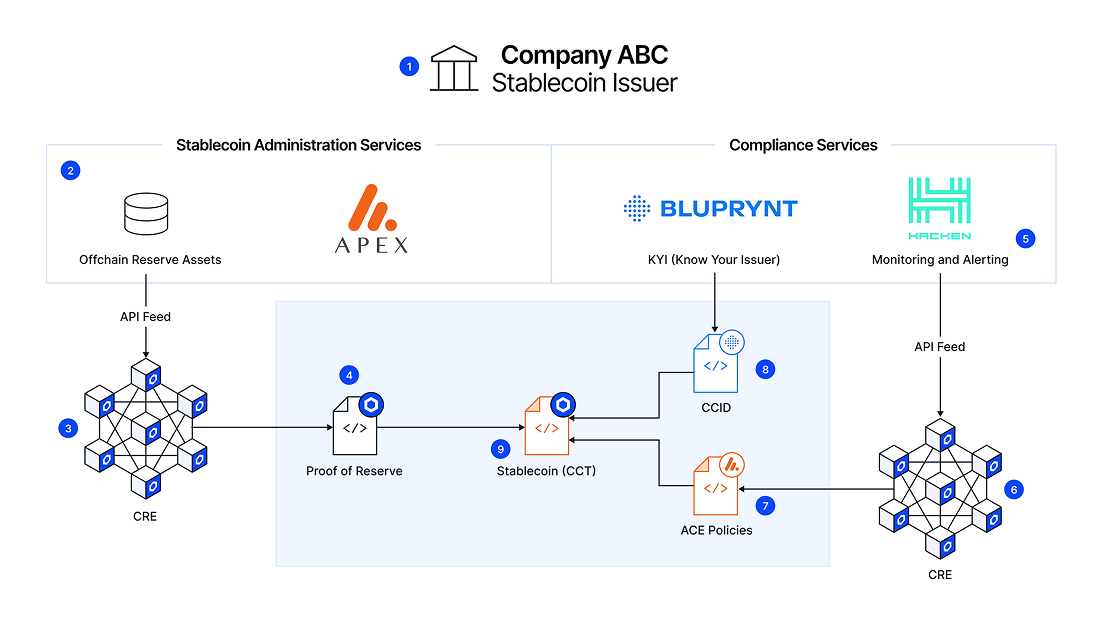
Enterprise-grade infrastructure requires institutional-grade security. Partner with a regulated custodian that offers multi-party computation (MPC) wallet solutions and supports major stablecoin standards (ERC-20, SPL, etc.). Ensure the partner provides robust audit trails and integrates with your existing ERP systems. This step is critical for maintaining the "steady value" and reliability that businesses expect from their settlement rails [src-serp-4].
The stablecoin rail must speak the same language as your current financial stack. Build APIs that connect your treasury management system or ERP to the stablecoin network. This integration allows for automated reconciliation, reducing manual accounting errors. The goal is to make the stablecoin settlement feel as seamless as a standard bank transfer to your finance team, while leveraging the speed of blockchain [src-serp-1].

Private does not mean unregulated. Implement rigorous Know Your Customer (KYC) and Anti-Money Laundering (AML) checks for all participants on the network. Use the permissioned features of your chosen infrastructure to ensure only verified entities can transact. This layer of compliance protects the enterprise from regulatory scrutiny and ensures the stability of the settlement environment.

Before a full rollout, conduct a pilot program with a limited group of trusted partners. Test the end-to-end flow: minting, transfer, settlement, and redemption. Monitor gas fees, transaction finality, and system latency. Use this phase to refine your operational procedures and stress-test the integration points between your internal systems and the blockchain rail.
By following these steps, enterprises can build a private stablecoin infrastructure that is secure, compliant, and efficient. The result is a settlement layer that operates 24/7, reduces friction, and provides greater visibility into global cash flows.
Helpful gear
Use these product recommendations as a starting point, then choose the size, material, and price point that fit how you actually use the gear.
- Good starting point
- Matches the article topic

As an Amazon Associate, we may earn from qualifying purchases.
No comments yet. Be the first to share your thoughts!