Define the settlement scope
Before selecting a blockchain or compliance tool, you must determine exactly what the stablecoin will settle. The technical stack for internal treasury management looks fundamentally different from the infrastructure needed for cross-border B2B payments or tokenized asset settlement. Getting this wrong early leads to costly architectural rework and regulatory friction.
Private stablecoin infrastructure differs from public DeFi rails by prioritizing counterparty privacy and regulatory reporting over open composability. This distinction is critical because your settlement scope dictates your data architecture, identity requirements, and liquidity design.
Internal treasury management focuses on efficiency and balance sheet optimization. Here, the primary goal is moving value between subsidiaries or corporate accounts with minimal friction. The infrastructure needs robust internal controls and real-time reconciliation but does not require the same level of external counterparty screening as public-facing systems. The focus is on speed and auditability within a closed group.
Cross-border B2B payments introduce complexity. You are moving value across jurisdictions, which means your infrastructure must handle foreign exchange risk, sanctions screening, and multi-currency settlement. The stack needs to integrate with traditional banking rails for fiat on/off ramps while ensuring that transaction data satisfies anti-money laundering (AML) requirements in multiple countries. As noted by McKinsey, tokenized cash can drive modernization, but only if the underlying infrastructure supports these complex cross-border workflows without exposing sensitive pricing or counterparty strategies unnecessarily.
Tokenized asset settlement is the most complex scope. This involves settling ownership of real-world assets (RWAs) like bonds, real estate, or commodities. The stablecoin here acts as the settlement layer for the asset itself. Your infrastructure must ensure that the token minting/burning events are strictly coupled with the legal transfer of the underlying asset. This requires a "atomic settlement" model where the payment and the asset transfer happen simultaneously, preventing settlement risk. If the asset is fractionalized, you also need to manage shareholder registries and dividend distributions on-chain.
To define your scope, answer these three questions:
- Who are the counterparties? (Internal entities, known B2B partners, or open public users?)
- What is the settlement finality requirement? (Seconds for payments, or strict atomicity for assets?)
- What is the regulatory jurisdiction for each transaction? (Single jurisdiction or multi-jurisdictional?)
Your answers will determine whether you need a permissioned ledger, a privacy-focused public chain, or a hybrid approach.
choose the right privacy layer
You need to decide how to hide transaction details while keeping the data accessible for regulators. The three main options are zero-knowledge proofs, confidential transactions, and permissioned ledgers. Each has different trade-offs for compliance and performance.

| Privacy Mechanism | Regulatory Visibility | Implementation Complexity | Performance Impact |
|---|---|---|---|
| Zero-Knowledge Proofs | High (selective disclosure) | High | Moderate |
| Confidential Transactions | Medium | Medium | High |
| Permissioned Ledgers | Full | Low | High |
Zero-knowledge proofs allow you to prove compliance without revealing the underlying data. This is ideal for institutional stablecoins that need to protect proprietary trading strategies while satisfying audits. However, the computational overhead can slow down transaction throughput.
Confidential transactions hide the transaction amounts but often reveal the counterparties. This is a middle ground that works well for smaller networks but may not satisfy strict anti-money laundering requirements for large-scale payments.
Permissioned ledgers offer full visibility to authorized nodes. This is the simplest to implement and offers the highest performance, but it requires all participants to trust the network operators. For most compliance-first stablecoin projects, zero-knowledge proofs or permissioned ledgers are the best starting points.



As an Amazon Associate, we may earn from qualifying purchases.
Integrate custody and compliance
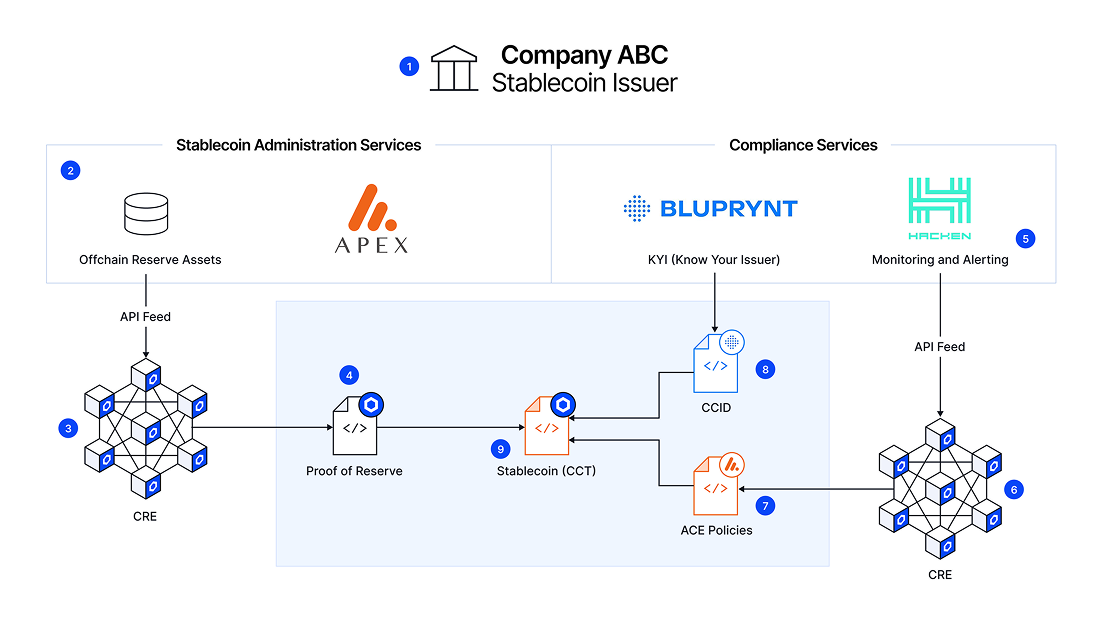
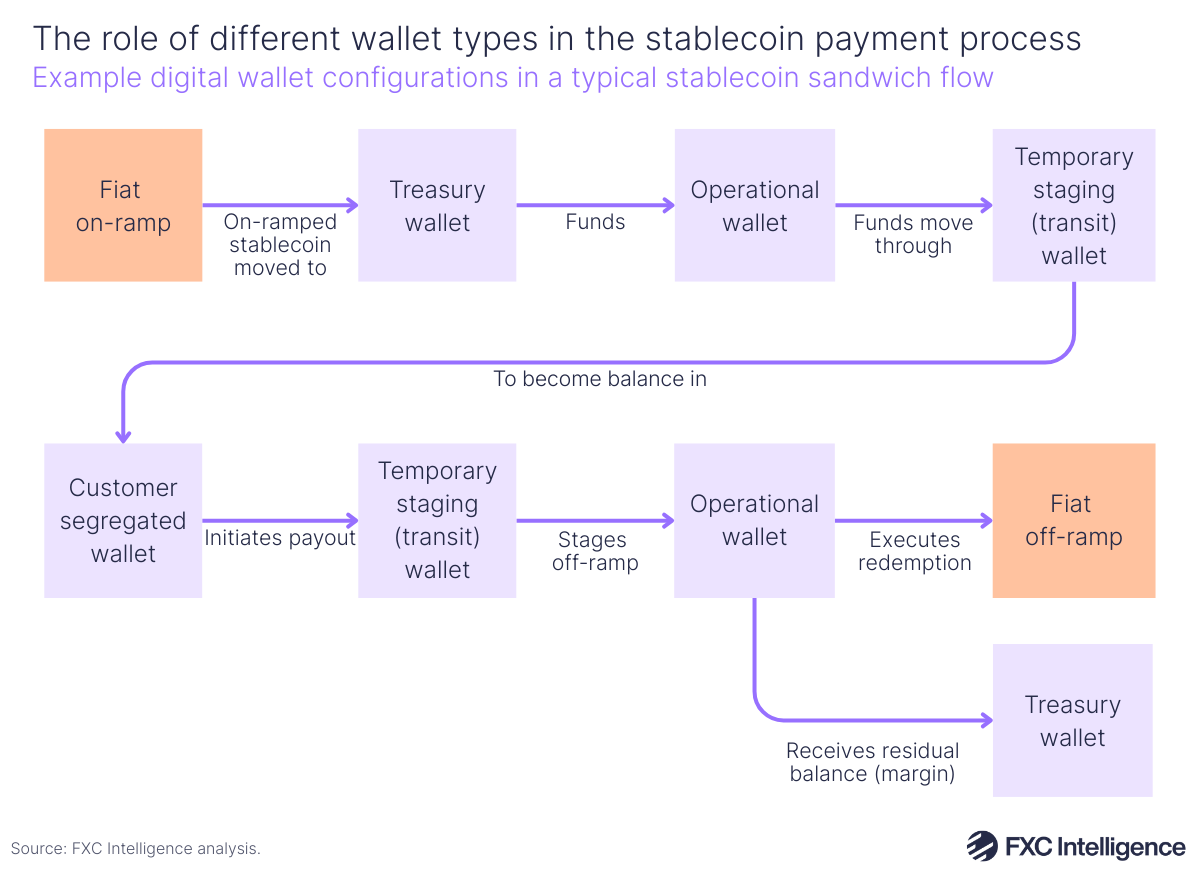
Institutional-grade stablecoin infrastructure requires more than smart contracts. You must pair secure custody with on-chain monitoring to satisfy AML, KYC, and sanctions workflows. Without this layer, your rails cannot reconcile on-chain balances with internal records or screen for fraud.
The process involves selecting a custody provider, integrating compliance APIs, and implementing real-time transaction monitoring. This sequence ensures that every stablecoin transfer is traceable, auditable, and compliant with regulatory standards.
Institutional custody solutions like Fireblocks or Copper provide multi-party computation (MPC) wallets and segregated asset management. These providers offer the security and insurance coverage required by regulators for holding user funds. Look for SOC 2 Type II compliance and clear audit trails.
Connect your onboarding flow to a provider like Chainalysis or Elliptic. These APIs screen user identities and transaction histories against sanctions lists (OFAC, UN, EU) and PEP databases. This step prevents illicit actors from accessing your stablecoin rails.
Deploy real-time monitoring tools to analyze every transaction on the blockchain. These tools flag high-risk addresses, mixers, or unusual transfer patterns. Stripe notes that infrastructure must include systems that "maintain steady value, reliable transfers, and... compliance and monitoring tools that handle identity checks, fraud screening, Anti-Money Laundering (AML) and sanctions workflows." This continuous surveillance is essential for maintaining your regulatory license.
Build automated reconciliation between your internal ledger and on-chain balances. Generate daily reports for regulators and internal audit teams. This ensures that your internal records match the blockchain state exactly, reducing the risk of operational errors or discrepancies.
Test the settlement rails
Before going live, you must prove that your private stablecoin infrastructure can handle real-world conditions without leaking data or breaking the ledger. Validation is not a single checkpoint; it is a sequence of stress tests, privacy audits, and reconciliation checks. If any of these fail, the system is not ready for institutional capital.
Validate latency and throughput
Private networks often prioritize privacy over speed, but settlement rails must still meet regulatory deadlines. You need to simulate peak transaction volumes to ensure the system does not stall. Use official load-testing tools to push the network to its limits. The goal is to confirm that transaction finality occurs within the expected time window, even during high congestion. If latency spikes, you risk failing audit requirements for timely reporting.
Check for privacy leakage
Privacy is the core value proposition of private stablecoins, but it must not compromise compliance. Run automated scans to ensure that no sensitive transaction data leaks into public logs or metadata. Verify that zero-knowledge proofs or similar cryptographic methods are functioning correctly. This step is critical for maintaining the confidentiality required by institutional clients while still allowing regulators to verify compliance where necessary.
Reconcile onchain and offchain records
Your internal systems must match the blockchain exactly. Perform a full reconciliation of onchain balances against your internal reserve records. This process verifies that every token issued is backed and every transaction is accounted for. Discrepancies here are red flags for auditors. Use automated scripts to compare these datasets in real-time, ensuring that your internal ledger is always synchronized with the blockchain state.
Pre-launch validation checklist
Use this checklist to confirm your settlement rails are ready for production:
-
Simulated peak load tests completed with no latency breaches
-
Privacy leakage scan passed with zero sensitive data exposure
-
Onchain and offchain balances reconciled to the cent
-
Audit logs verified for completeness and immutability
-
Rollback procedures tested and documented
Common private stablecoin: what to check next
Private stablecoin infrastructure sits at the intersection of blockchain technology and regulated finance. It is not merely a digital token but a comprehensive system designed to maintain value stability, ensure reliable transfers, and enforce strict compliance standards. Understanding the core components and availability of these solutions is essential for legal and compliance teams evaluating on-chain finance.
What is stablecoin infrastructure?
Stablecoin infrastructure is the set of systems that keep stablecoins functioning by maintaining steady value and reliable transfers. Because stablecoins touch regulated financial systems, this infrastructure extends beyond code to include compliance and monitoring tools. These systems handle identity checks, fraud screening, Anti-Money Laundering (AML) and sanctions workflows, and on-chain transaction analysis. They also reconcile on-chain balances with internal records to ensure regulatory alignment Stripe.
Is there a private stablecoin?
Yes, private stablecoins are now ready for mainstream finance. Recent developments, such as Aleo's permissionless private stablecoin architecture, provide the privacy layer necessary for institutional adoption. This approach treats privacy not as an optional feature but as the foundation that makes on-chain finance viable for regulated entities. The technology is currently available for those seeking to implement confidential transaction models Aleo.
How do private stablecoins differ from public ones?
Public stablecoins record all transactions on a public ledger, making them visible to anyone. Private stablecoins use cryptographic techniques to hide transaction details while still allowing regulators and auditors to verify compliance when necessary. This distinction is critical for institutions that must protect customer data while adhering to transparency requirements. The shift toward privacy-first infrastructure is driven by the need to balance confidentiality with accountability.
Why is compliance important for private stablecoins?
Compliance is the bridge between decentralized technology and traditional banking. Without robust compliance tools, private stablecoins cannot integrate with existing financial systems. Regulations require institutions to monitor for illicit activities, which means even private transactions must be traceable by authorized parties. Infrastructure that supports this dual requirement—privacy for users, transparency for regulators—is what enables widespread institutional adoption.
No comments yet. Be the first to share your thoughts!