Define settlement requirements first
Before you write a single line of smart contract code or select a blockchain protocol, you need to map out exactly what your enterprise settlement infrastructure must achieve. Private stablecoin infrastructure is not a one-size-fits-all solution; it is a specialized tool designed to solve specific liquidity, speed, or compliance bottlenecks. If you skip this foundational step, you risk building a system that is either over-engineered for simple internal transfers or under-protected for sensitive cross-border flows.
Start by categorizing your use cases. Are you primarily looking to reduce the friction and cost of cross-border payments, or do you need to streamline internal treasury movements between subsidiaries? McKinsey highlights that the value of tokenized cash lies in its ability to modernize payment systems by offering near-instant finality and programmable features. However, the technical requirements for a cross-border remittance flow differ significantly from those of an internal reconciliation process.
Once your use cases are clear, define the non-negotiable constraints. For cross-border payments, you might prioritize interoperability with existing banking rails and regulatory compliance in multiple jurisdictions. For internal treasury management, you might focus on programmable automation and audit trails. Canton Network demonstrates how programmable privacy allows assets to move freely without exposing pricing, counterparties, or strategies, which is critical for institutions that cannot broadcast trade intentions to the public mempool.
Document these requirements in a structured format. This document will serve as the blueprint for selecting the right consensus mechanism, privacy layer, and compliance hooks. By anchoring your technical decisions in clear business objectives, you ensure that your private stablecoin infrastructure delivers measurable value rather than just technological novelty.
Select the right infrastructure provider
Building private stablecoin infrastructure requires more than just a wallet; it demands a partner capable of handling institutional-grade security and regulatory complexity. The provider you choose acts as the backbone of your settlement layer, so evaluating them against strict technical and compliance criteria is non-negotiable.
Fireblocks remains the dominant force in this space, widely recognized for its Multi-Party Computation (MPC) technology and strict custody models. Their infrastructure is designed to empower organizations to build, manage, and grow stablecoin operations without exposing private keys to single points of failure. For businesses prioritizing security above all else, Fireblocks offers a proven track record with major financial institutions.
Stripe provides a different angle, focusing heavily on seamless API integration and operational simplicity. Their guide to stablecoin infrastructure emphasizes the need for systems that maintain steady value and reliable transfers. If your primary goal is to embed stablecoin payments into existing checkout flows or accounting systems with minimal friction, Stripe’s developer-friendly approach may reduce your integration timeline significantly.
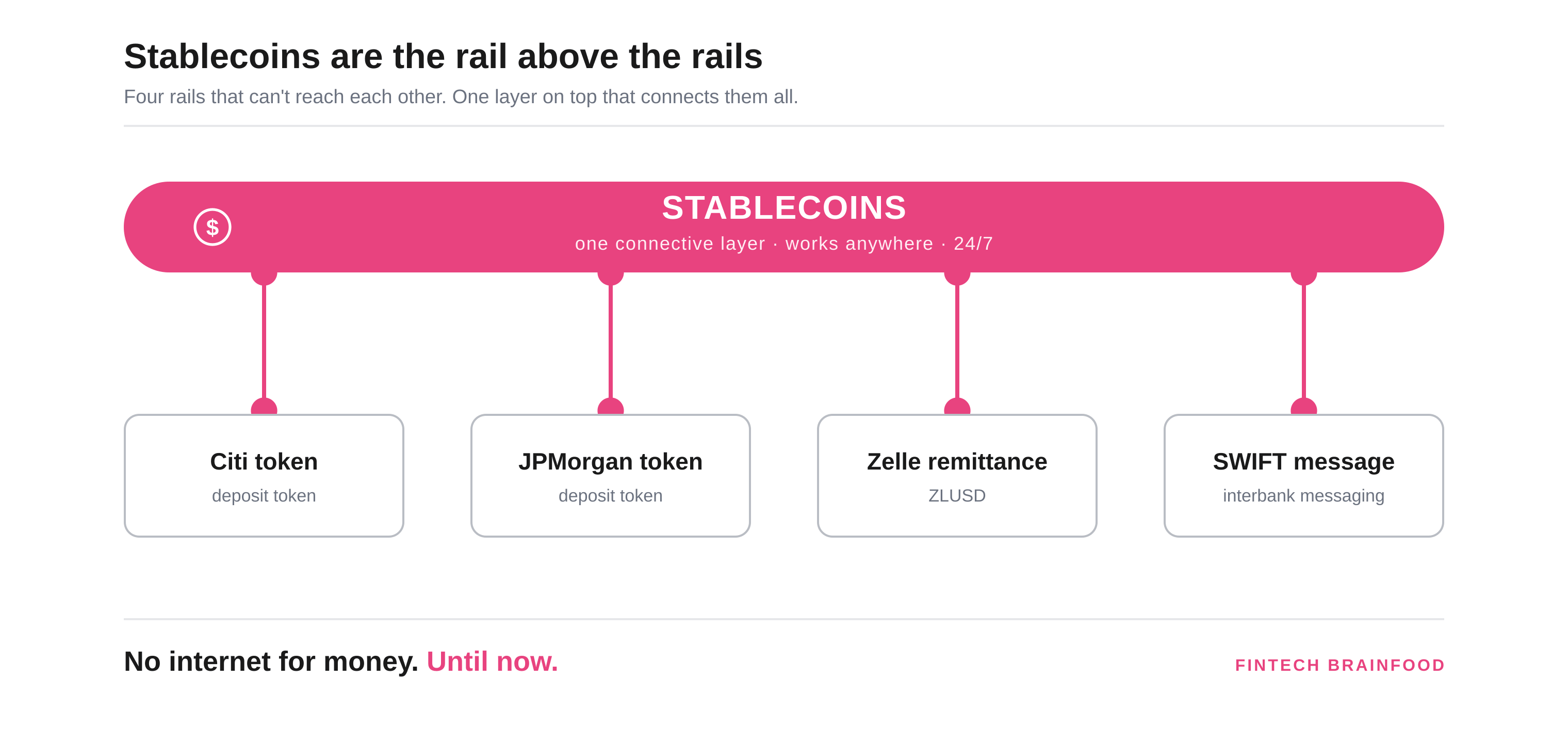
When comparing options, look beyond marketing claims. Evaluate each provider’s ability to handle high-volume transaction processing, their support for multi-chain deployments, and the depth of their compliance reporting tools. The table below compares key features across three major providers to help you decide.
| Provider | Security Model | Integration Style | Best For |
|---|---|---|---|
| Fireblocks | MPC & HSM Custody | API & SDK | High-volume institutional custody |
| Stripe | Managed Infrastructure | REST API | Seamless web checkout integration |
| Crossmint | Wallet-as-a-Service | Developer SDKs | Web3-native app onboarding |
AmazonProductGrid


Integrate Compliance and Privacy Controls
Building private stablecoin infrastructure requires embedding regulatory checks directly into the token’s lifecycle. You cannot treat compliance as an afterthought; it must be woven into the issuance and transfer logic. This approach ensures that your private stablecoin infrastructure adheres to global standards without sacrificing the speed of on-chain settlement.
The technical implementation involves two parallel tracks: identity verification for participants and privacy preservation for transaction data. By using permissioned ledger architectures or zero-knowledge proofs, you can verify that users are KYC-compliant without exposing their balance or transaction history to the public network. This balance is critical for enterprise adoption, where confidentiality is as important as legality.
1. Embed Identity Verification at Issuance
Before any stablecoin enters circulation, your system must verify the identity of the minter and the initial recipient. This step typically involves integrating with a trusted identity provider or using decentralized identity standards. The smart contract should enforce a whitelist of approved addresses, ensuring that only verified entities can hold or move the asset. This creates a closed loop of trust, reducing the risk of illicit flows from the start.
2. Implement Permissioned Access Controls
Unlike public cryptocurrencies, your private stablecoin infrastructure should restrict who can view and interact with the ledger. Use permissioned blockchain networks or private channels within a consortium chain. This allows you to control access rights at the node level, ensuring that only authorized participants can validate transactions. This layer of security protects sensitive counterparty information while maintaining an immutable audit trail for regulators.
3. Apply Zero-Knowledge Proofs for Privacy
To meet strict data privacy regulations like GDPR, you need to prove compliance without revealing underlying data. Zero-knowledge proofs (ZKPs) allow you to generate a cryptographic proof that a transaction involves only KYC-verified parties and adheres to policy limits, without disclosing the actual amounts or identities on-chain. This technique enables "programmable privacy," where the network validates the rules while keeping the business logic confidential.
4. Automate Ongoing AML Monitoring
Compliance is not a one-time check. Integrate real-time monitoring tools that scan transactions against sanctions lists and known bad actors. Your infrastructure should automatically flag or freeze transactions that violate predefined risk thresholds. This automated surveillance ensures that your stablecoin remains compliant over time, adapting to new regulatory requirements without manual intervention for every transfer.
Analyze market liquidity and risks
Building private stablecoin infrastructure requires more than just selecting a token; it demands a rigorous assessment of how that token behaves under pressure. The stability of your settlement layer hinges on the quality of the underlying fiat reserves and the depth of liquidity within your chosen network. Without this foundation, even a technically sound implementation can face friction during peak transaction volumes.
Reserve Transparency and Asset Quality
The credibility of any private stablecoin rests on the integrity of its backing assets. For enterprise use, you must verify that reserves are held in high-quality, liquid instruments such as short-term U.S. Treasuries or cash equivalents. Morgan Stanley notes that stablecoins are designed to maintain a stable value by pegging to underlying fiat, but the mechanism matters.
You should require regular, audited attestations rather than opaque quarterly reports. Look for providers who publish daily reserve compositions and allow for real-time verification. This transparency reduces counterparty risk and ensures that the stablecoin can meet redemption requests without disrupting settlement flows. If the reserves are tied up in illiquid corporate bonds or complex derivatives, the stablecoin fails its primary purpose as a settlement medium.
Network Liquidity and Slippage
Liquidity determines how easily your stablecoin can be moved across your private network or integrated with external partners. Unlike public stablecoins that rely on decentralized exchanges, private stablecoins often operate within closed loops or permissioned ledgers. You need to model transaction throughput and ensure sufficient liquidity pools exist to absorb large settlements without slippage.
Consider integrating with established infrastructure providers like Visa or Stripe, which are actively building stablecoin rails. Visa’s Open USD (OUSD) initiative, for example, aims to provide open infrastructure that gives businesses the economics of blockchain with the reliability of traditional payment networks. Assess whether your chosen provider offers deep liquidity integration with traditional banking rails, allowing seamless conversion between stablecoin and fiat when necessary. This hybrid approach mitigates the risk of being trapped in an illiquid digital silo.
Stress Testing and Failure Modes
Finally, conduct stress tests that simulate high-volume settlement periods and reserve depletion scenarios. Identify single points of failure in your reserve management and liquidity routing. Does your infrastructure allow for rapid rebalancing? Can it handle sudden spikes in transaction volume without degrading performance? By addressing these risks proactively, you ensure that your private stablecoin infrastructure remains a robust tool for enterprise settlement rather than a liability.
Deploy and monitor settlement rails
Launching your private stablecoin infrastructure requires more than just code; it demands rigorous operational oversight. The transition from testnet to mainnet is where theoretical models meet real-world friction. You must establish continuous monitoring for transaction success rates, latency, and compliance flags to ensure the rails remain reliable for enterprise settlement.
Start by implementing real-time dashboards that track the health of your settlement nodes. According to Fireblocks, monitoring the integrity of digital asset transfers is paramount for maintaining trust in stablecoin infrastructure [src-serp-1]. Your system should alert operations teams immediately if latency spikes or if transaction failure rates exceed your predefined thresholds. This proactive stance prevents minor glitches from becoming systemic outages.
Compliance monitoring must run parallel to technical monitoring. Integrate automated screening tools that flag suspicious activity or sanctions violations before transactions settle. As Stripe notes, robust infrastructure must maintain steady value and reliable transfers while adhering to regulatory standards [src-serp-5]. This dual-layer approach ensures that your private stablecoin network operates smoothly and legally from day one.
Frequently asked questions about private stablecoins
Private stablecoin infrastructure addresses the operational and strategic needs of enterprise settlement. Below are the most common questions regarding regulatory compliance, privacy, and integration.
Helpful gear
Use these product recommendations as a starting point, then choose the size, material, and price point that fit how you actually use the gear.
- Good starting point
- Matches the article topic

As an Amazon Associate, we may earn from qualifying purchases.
Work through Private Stablecoin Infrastructure
No comments yet. Be the first to share your thoughts!