Define settlement requirements
Before writing any code, you must articulate exactly what your private stablecoin infrastructure needs to achieve. Institutions do not build these systems for speculation; they build them for settlement. The primary driver is the need to move value without exposing sensitive counterparty data, trade secrets, or workflow metadata to the public ledger.
Public blockchains are transparent by design. While useful for decentralized finance, they are often unsuitable for high-stakes institutional finance where confidentiality is paramount. As noted by the Ethereum Infrastructure Public Trust Foundation, institutions require stablecoins that function as settlement cash without revealing amounts or counterparties to non-participants.
Your requirements should focus on three core pillars:
- Privacy: Ensure that pricing, execution strategies, and counterparty identities remain visible only to authorized participants.
- Speed: Achieve finality within seconds or minutes, rather than waiting for block confirmations that may take hours.
- Composability: Allow the stablecoin to interact with other permissioned financial applications within your private network without leaking data to the public chain.
Start by mapping out your existing settlement workflows. Identify where public chain latency or data exposure creates friction. This clarity will dictate whether you need a fully private ledger or a hybrid model that settles privately but anchors proofs on a public chain for auditability.
Choose the right blockchain rails for private stablecoin infrastructure
Selecting the underlying ledger is a structural decision that defines your privacy boundaries and regulatory exposure. You generally choose between permissioned ledgers, which offer strict access control, and public chains enhanced with privacy layers, which balance openness with confidentiality.
Permissioned ledgers are familiar territory for institutions. They operate on a closed network where validators are known entities, making compliance auditing straightforward. However, this setup often sacrifices the liquidity and composability found on public networks. You are building a silo, which is safe but potentially limiting for broader settlement needs.
Public chains with privacy layers, such as Aleo or Canton Network, offer a different path. These platforms allow stablecoins to move freely across a public ledger without exposing pricing, counterparties, or trading strategies. As noted by Canton Network, this approach provides "programmable privacy" while maintaining complete composability, meaning your private assets can still interact with the wider DeFi ecosystem.
| Feature | Permissioned Ledger | Public Chain with Privacy Layer |
|---|---|---|
| Access Control | Strict, identity-based | Permissionless, zero-knowledge proofs |
| Composability | Limited to internal network | Full interaction with public protocols |
| Privacy Level | Transactional (who can see it) | Content (what is happening) |
| Regulatory Fit | High (known validators) | Moderate (requires KYC/AML bridges) |
The choice depends on your primary constraint: is it absolute control over who participates, or is it the need to transact privately within a liquid, open market? For most institutional settlement layers aiming for scale, the privacy-enhanced public rail offers a more future-proof foundation.


As an Amazon Associate, we may earn from qualifying purchases.
Integrate custody and compliance tools
Private stablecoin infrastructure cannot function without a secure custody layer and automated compliance controls. For regulated entities, the ledger is only as trustworthy as the keys that control it and the checks that verify the participants. You must embed these tools directly into your settlement flow to ensure that every transaction is both secure and audit-ready.
Institutional custody requires more than a simple software wallet. You need a provider that offers multi-party computation (MPC) or threshold signature schemes (TSS) to eliminate single points of failure. Providers like Fireblocks or BitGo offer institutional-grade security with real-time settlement capabilities, allowing your infrastructure to cut out intermediaries while maintaining strict control over private keys. Ensure the provider supports the specific blockchain rails you intend to use.
Compliance must be continuous, not a one-time onboarding check. Integrate automated Know Your Customer (KYC) and Anti-Money Laundering (AML) screening tools that run against your private stablecoin transfers. These tools should check wallet addresses against global sanctions lists and monitor for suspicious activity patterns in real time. This automation is essential for maintaining regulatory standing and preventing your infrastructure from being used for illicit flows.
Your custody and compliance tools should not be separate silos; they must be integrated into the smart contract or settlement layer itself. This means building "compliance-aware" transactions where the smart contract can verify that the sender and receiver have passed necessary checks before finalizing the transfer. By embedding these rules into the infrastructure, you ensure that only compliant entities can interact with your private stablecoin network, reducing operational risk and legal exposure.
Manage liquidity and reserves
Maintaining the peg is the primary operational requirement for private stablecoin infrastructure. Liquidity doesn’t happen by accident; it requires strict reserve management and real-time reconciliation with traditional banking rails. If your reserves are opaque or your settlement links are slow, the system fails.
Segregate and reconcile daily
Institutional-grade stablecoins must hold reserves in segregated accounts to protect user assets from corporate insolvency. Daily audits are not optional—they are the baseline for trust. You need automated reconciliation that matches on-chain token supply against off-chain bank balances in real-time. Any discrepancy must trigger an immediate halt in minting or burning until resolved.
Integrate with traditional banking rails
Your stablecoin’s value is only as strong as its ability to convert to fiat when needed. Integrate directly with licensed custodians and settlement banks that support high-volume, low-latency transfers. This integration ensures that when institutional clients redeem tokens, the underlying fiat moves instantly, preventing arbitrage attacks that exploit settlement delays.
-
Verify daily reserve audits are automated and immutable
-
Ensure reserves are held in segregated, insured bank accounts
-
Test real-time reconciliation between on-chain supply and off-chain balances
-
Confirm direct integration with licensed custodians for instant fiat conversion
Maintain liquidity buffers
Even with perfect reserves, market volatility can cause temporary imbalances. Maintain a liquidity buffer in highly liquid assets, such as Treasury bills or cash equivalents, to meet sudden redemption spikes. This buffer acts as a shock absorber, ensuring that your stablecoin remains pegged even during periods of high market stress or banking sector turbulence.
Test the settlement workflow
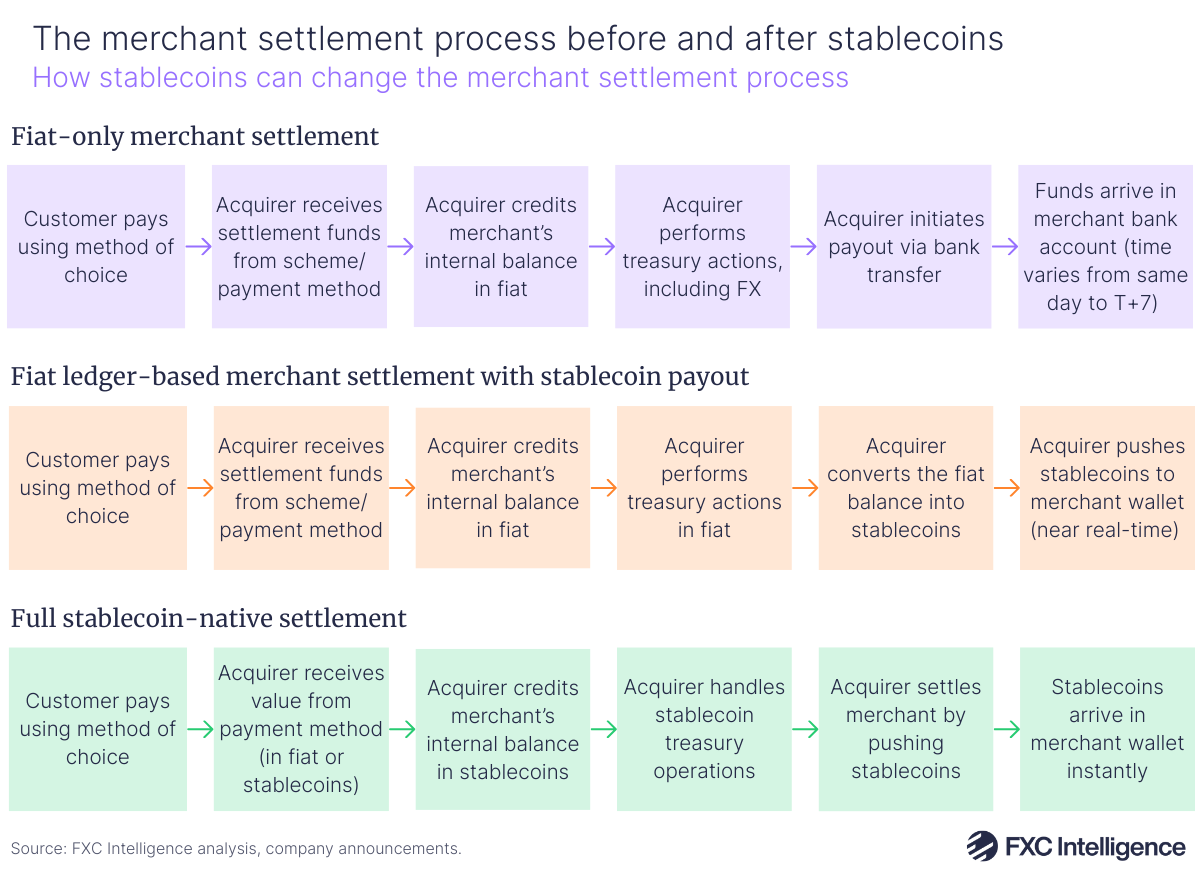
Before going live, you need to verify that your private stablecoin infrastructure handles a full transaction cycle without errors. This isn't just about checking if the code compiles; it's about proving that funds move securely from origin to destination across your custody systems and blockchain rails.
Start by deploying a testnet environment that mirrors your mainnet configuration. Run a complete issuance and redemption cycle. Mint tokens against a verified fiat reserve, transfer them between institutional wallets, and then burn them to redeem the underlying asset. This end-to-end flow ensures that your smart contracts, compliance filters, and liquidity pools are all communicating correctly.
Next, stress-test the system under load. Simulate high-frequency settlement scenarios to ensure your infrastructure can handle peak volumes without latency spikes or failed transactions. Real-time settlement is the core promise of stablecoins, so any bottleneck here will undermine trust with institutional partners.
Finally, conduct a security audit of the entire workflow. Verify that access controls are strict and that no single point of failure exists in the transfer process. Only after passing these checks should you consider a limited mainnet launch.
Frequently asked questions about private stablecoin infrastructure
Here are answers to the most common questions about private stablecoin infrastructure, based on real reader queries and current market data.
No comments yet. Be the first to share your thoughts!