Why private stablecoin infrastructure matters now
Public blockchains are built for transparency, but institutional finance runs on control. For years, the industry has debated whether digital assets belong in traditional ledgers. The answer is arriving not through public decentralization, but through private stablecoin infrastructure designed for specific counterparties and regulated environments.
The shift is clear. McKinsey notes that tokenized cash and stablecoin payments infrastructure are driving the modernization of cross-border payments, moving value transfer from slow, opaque intermediaries to programmable, real-time settlement layers McKinsey. This isn't just about speed; it's about compliance. Private infrastructure allows institutions to embed KYC/AML checks directly into the token lifecycle, ensuring that liquidity moves only between verified entities.
Barclays Private Bank describes this new generation of financial infrastructure as a bridge between traditional fiat stability and blockchain efficiency Barclays. By keeping the ledger private, banks can offer the 24/7 settlement capabilities of crypto without exposing their balance sheets to the volatility of public trading pairs.
For treasurers and settlement desks, the choice is no longer whether to adopt tokenized assets, but which infrastructure layer supports their risk appetite. Public chains offer liquidity at the cost of control. Private stablecoin infrastructure offers control at the cost of broader network effects. For high-stakes institutional settlement, control is the priority.
Architecting the private settlement layer
Private stablecoin infrastructure is not just a payment rail; it is a specialized tech stack. At its core, it combines smart contracts, oracles, and off-chain systems to enable transactions that remain invisible to the public ledger. This architecture allows institutions to move value freely without exposing pricing, counterparties, or trading strategies to the broader market.
The settlement layer relies on three interconnected pillars: custody, compliance, and programmable privacy. Custody solutions must be institutional-grade, ensuring that digital assets are secured by multi-party computation or hardware security modules rather than simple private keys. Compliance is woven directly into the protocol through embedded identity verification, allowing only authorized entities to transact while keeping the actual trade data private.
This approach solves the transparency dilemma inherent in public blockchains. By using zero-knowledge proofs or permissioned channels, the infrastructure maintains complete composability with existing financial systems while hiding the sensitive details of the exchange. The result is a settlement environment where the mechanics of the trade are secure and compliant, but the market impact remains neutral.

The scale of this infrastructure is significant as stablecoins continue to integrate with traditional finance. Understanding the volume of these private transactions helps contextualize why robust custody and compliance layers are non-negotiable for 2026.
Comparing infrastructure providers and tools
Selecting the right private stablecoin infrastructure requires weighing custody models, privacy guarantees, and interoperability. The market has shifted from simple wallets to institutional-grade rails that balance regulatory compliance with operational secrecy.
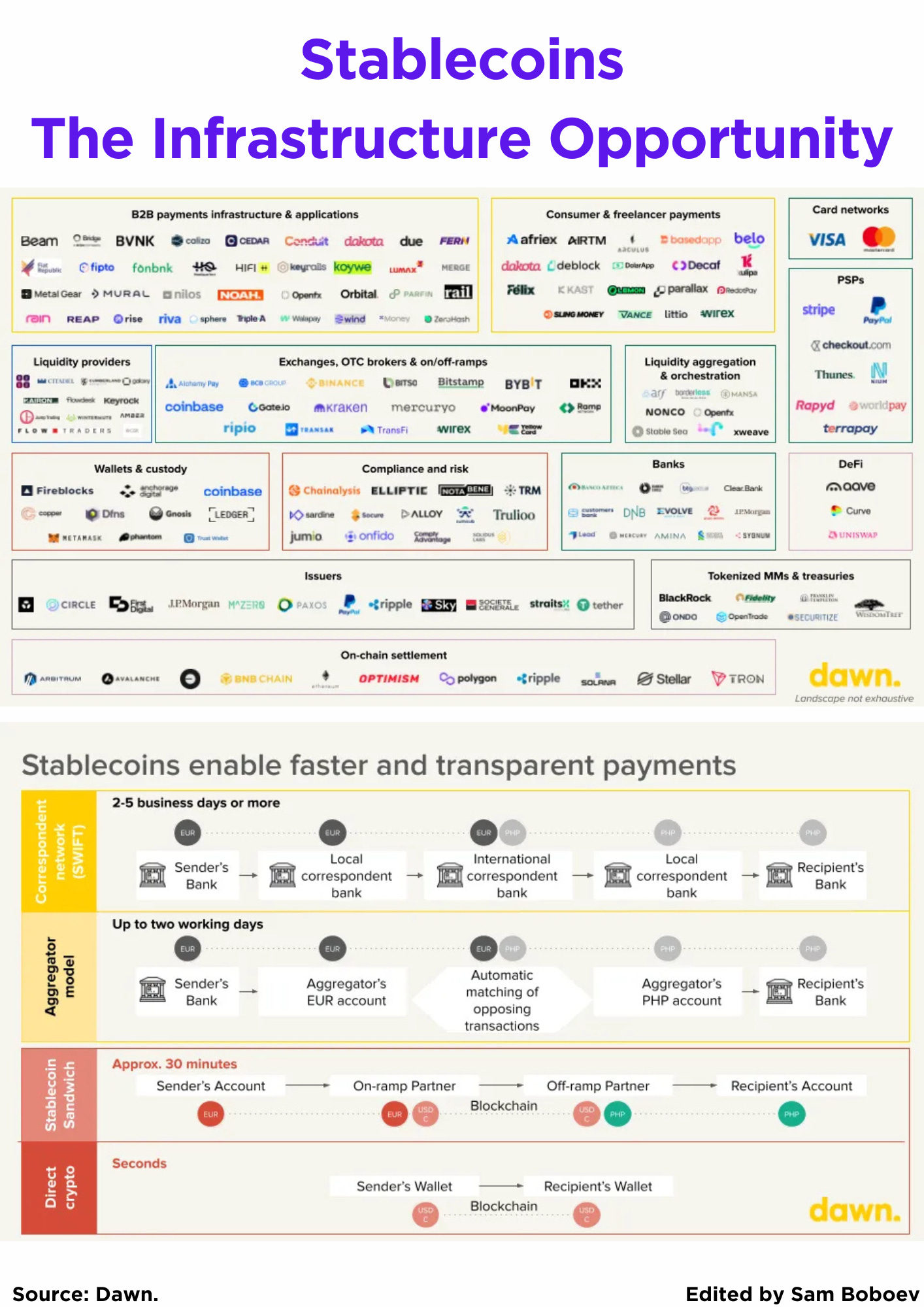
Fireblocks remains the dominant choice for enterprises needing a unified custody and transfer layer. Their platform offers MPC-based security and a broad network of liquidity providers, making it ideal for high-volume issuers who prioritize operational efficiency over deep on-chain privacy. Fireblocks focuses on the "how" of moving assets securely across chains.
Visa’s Open USD (OUSD) represents a different approach: open infrastructure built for mass adoption. By leveraging Visa’s existing payment network, OUSD aims to bridge the gap between traditional finance and digital assets. This model is particularly relevant for merchants and payment processors who need seamless integration with existing settlement systems rather than complex blockchain management.
For projects requiring strict counterparty privacy on public ledgers, Canton Network provides a unique solution. It enables private stablecoin payments on public blockchains by keeping transaction details hidden from the broader network while maintaining composability. This is essential for institutions that cannot expose pricing strategies or counterparty relationships to the public.
Key infrastructure comparison
The following table outlines the primary differences between these leading providers.
| Provider | Primary Focus | Privacy Model | Best For |
|---|---|---|---|
| Fireblocks | Custody & Transfers | Off-chain secrecy, on-chain transparency | High-volume issuers & enterprises |
| Visa (OUSD) | Payment Rails | Standard KYC/AML compliance | Merchants & mass adoption |
| Canton Network | Private Transactions | Counterparty-only visibility | Institutional trading & strategy protection |
Market context
Understanding the underlying asset volatility is critical when modeling infrastructure costs. Stablecoins are pegged, but the reserve assets backing them and the broader crypto market sentiment influence liquidity depth and spread.
Building private stablecoin infrastructure
Deploying private stablecoin infrastructure requires more than just choosing a blockchain. Institutions must align technical architecture with regulatory expectations and operational workflows. The goal is to create a system that moves value quickly while keeping compliance data visible to authorized parties.
Start by mapping your current payment flows. Identify where friction exists: slow settlement times, high intermediary fees, or manual reconciliation processes. Private stablecoins solve these issues by offering instant settlement on public or permissioned ledgers. However, the infrastructure must support your specific compliance needs from day one.
Step 1: Define compliance and identity layers
Private stablecoins rely on identity verification to function legally. Unlike public tokens, private variants can restrict transfers or freeze assets if needed. You must integrate Know Your Customer (KYC) and Anti-Money Laundering (AML) checks directly into the wallet or custody layer. This ensures that only verified entities can hold or move the tokens.
Step 2: Select custody and wallet solutions
Institutional custody is non-negotiable for private stablecoin infrastructure. You need multi-signature wallets or hardware security modules (HSMs) to protect private keys. Avoid self-custody solutions unless you have a dedicated security team. The custody provider should offer real-time transaction monitoring and audit trails that meet your internal governance standards.
Step 3: Integrate reserve and settlement systems
The stability of your private stablecoin depends on its reserve backing. Choose a reserve structure that matches your liquidity needs. Most institutions use cash or short-term government securities. Ensure your treasury management system can automatically mint and burn tokens based on reserve balances. This automation reduces operational risk and ensures transparency.
Step 4: Test with a closed pilot
Before launching to your full user base, run a closed pilot. Select a small group of internal users or trusted partners. Test transaction speed, compliance flagging, and reserve reconciliation. This phase reveals bugs in your smart contracts or integration points without risking significant capital. Use this data to refine your operational procedures.
Step 5: Launch and monitor
Once the pilot is successful, expand the rollout. Monitor transaction volumes and compliance alerts closely. Private stablecoin infrastructure requires ongoing maintenance. Regulatory changes may require updates to your KYC/AML providers or reserve composition. Stay engaged with industry groups to stay ahead of compliance shifts.
Common pitfalls and how to avoid them
Many institutions fail because they treat private stablecoins as a simple payment tool rather than a complex infrastructure project. Here are the most common mistakes and how to fix them.
Ignoring compliance integration: Building the token first and adding compliance later is a costly mistake. Compliance must be baked into the token standard or the custody layer. If your token doesn't support restrictions, you may face regulatory hurdles.
Overcomplicating the tech stack: You don't need a custom blockchain. Most private stablecoins run on existing public chains like Ethereum or Polygon, or permissioned networks like Hyperledger. Use established infrastructure providers to reduce development time and security risks.
Neglecting user experience: If your private stablecoin requires too many steps to send or receive, users will abandon it. Keep the user interface simple. Hide the complexity of blockchain transactions behind familiar payment interfaces.
Key takeaways
- Private stablecoin infrastructure combines blockchain technology with strict compliance layers.
- Start with a clear definition of your compliance and custody requirements.
- Test thoroughly with a closed pilot before full deployment.
- Monitor and adapt your infrastructure as regulations evolve.
Helpful gear
Use these product recommendations as a starting point, then choose the size, material, and price point that fit how you actually use the gear.
- Good starting point
- Matches the article topic

As an Amazon Associate, we may earn from qualifying purchases.
No comments yet. Be the first to share your thoughts!