Why private stablecoin infrastructure matters
Public blockchains offer transparency, but for B2B settlement, that visibility is often a liability. Institutions need to move value fast without broadcasting pricing strategies, counterparty relationships, or transaction volumes to the world. Private stablecoin infrastructure solves this by allowing you to settle payments in real-time while keeping sensitive commercial data confidential from the public ledger.
Think of public chains as glass-walled banks where everyone can see your balance and every transaction. Private rails are like a high-security vault: the value moves instantly, but the details remain hidden from competitors and the public. This programmable privacy ensures that your settlement layer doesn’t become a leak point for your business intelligence.
The business case rests on three pillars: institutional privacy, regulatory compliance, and settlement speed. By integrating stablecoins into programmable infrastructures, you gain the immediacy of real-time settlement without the compliance risks of exposing sensitive data on public ledgers. This approach allows you to modernize financial infrastructure without sacrificing the security standards required by legal and regulatory bodies.
As noted by industry leaders, this model offers "programmable privacy, but with complete composability." You get the speed of blockchain settlement with the discretion required for high-stakes B2B transactions. This balance is what makes private stablecoin infrastructure essential for institutions ready to modernize their payment rails.
Map your compliance and legal requirements
Building private stablecoin infrastructure for B2B settlement is not merely a technical upgrade; it is a legal undertaking. Before writing a single line of smart contract code, you must establish a compliant legal foundation. High-stakes B2B transactions involve significant capital movement, making adherence to Anti-Money Laundering (AML) and Know Your Customer (KYC) protocols non-negotiable.
Start by defining the regulatory perimeter for your jurisdiction and the jurisdictions of your counterparties. If you are operating in the United States, the Office of the Comptroller of the Currency (OCC) and FinCEN provide critical guidance on how stablecoins are treated as money services businesses. In Europe, the Markets in Crypto-Assets (MiCA) regulation sets new standards for asset-referenced tokens. You need to determine whether your infrastructure falls under banking regulations, payment institution rules, or emerging crypto-asset frameworks.
Next, integrate data privacy laws into your design. The General Data Protection Regulation (GDPR) in the EU and similar laws in other regions impose strict limits on how personal data is stored and processed. Since blockchain ledgers are immutable, you must architect your system to avoid storing sensitive personal information on-chain. Instead, keep sensitive data off-chain and use cryptographic proofs to verify compliance without exposing raw data.
Finally, engage with legal counsel early to review your licensing requirements. Depending on your model, you may need specific licenses to operate as a custodian, a payment service provider, or a virtual asset service provider. A misstep here can halt your entire infrastructure launch.
Pre-implementation compliance checklist
-
AML/KYC framework mapped to target jurisdictions
-
Data residency and privacy impact assessment completed
-
Smart contract audit status verified by reputable firm
-
Regulatory licensing review finalized with legal counsel
Select the right privacy and custody layer
Choosing between public chains with privacy wrappers and permissioned ledgers is the defining technical decision for private stablecoin infrastructure. The goal is to maintain institutional-grade custody and regulatory compliance without sacrificing the interoperability that makes settlement efficient. Public chains like Ethereum offer deep liquidity but expose transaction data by default. Privacy wrappers, such as those offered by Canton Network, attempt to solve this by allowing programmable privacy while keeping assets composable across different systems. Permissioned ledgers, conversely, restrict access entirely, offering maximum control but often at the cost of network effects.
The choice hinges on where your counterparties sit. If you are settling with external banks or funds that require on-chain verification, a public chain with selective disclosure is usually necessary. If your settlement is strictly internal or between known, vetted entities, a permissioned ledger may reduce compliance overhead significantly. Canton’s approach illustrates the middle ground: it allows stablecoins to move freely without exposing pricing, counterparties, or strategies, effectively decoupling privacy from isolation. This is critical for B2B workflows where visibility is needed for auditors but not for competitors.
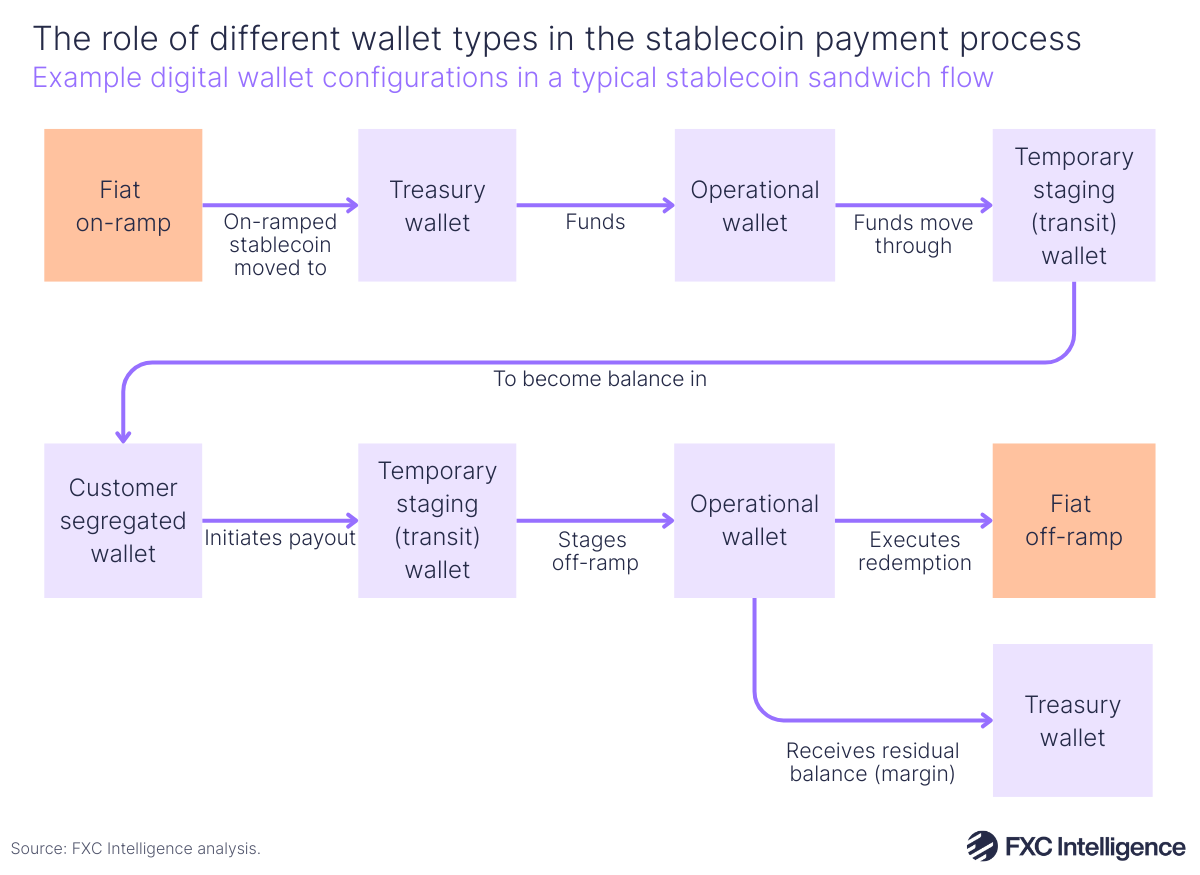
To compare these architectures directly, consider how they handle the four pillars of B2B settlement: transparency, speed, compliance, and interoperability.
| Metric | Public Chain + Privacy Wrapper (e.g., Canton) | Permissioned Ledger |
|---|---|---|
| Transparency | Selective: Data is hidden from unauthorized parties but verifiable by auditors | Restricted: Only pre-approved nodes can view transaction history |
| Settlement Speed | Variable: Dependent on base layer block times and privacy layer complexity | High: Optimized for finality within a known network of participants |
| Compliance Overhead | Moderate: Requires sophisticated KYC/AML integration at the wrapper level | Lower: Access control is built-in, simplifying identity management |
| Interoperability | High: Assets remain composable across DeFi and TradFi bridges | Low: Typically siloed; requires complex bridges to interact with public chains |
Custody remains the anchor for both models. Whether you use a privacy wrapper or a private ledger, the underlying stablecoins must be held in institutional-grade custodial wallets. This means using multi-signature schemes and hardware security modules (HSMs) to protect the private keys. The privacy layer does not replace custody; it obscures the movement of funds held within it. Ensure your custody provider supports the specific chain or ledger you choose, as cross-chain custody adds significant technical risk and cost.
Integrate settlement and payment rails
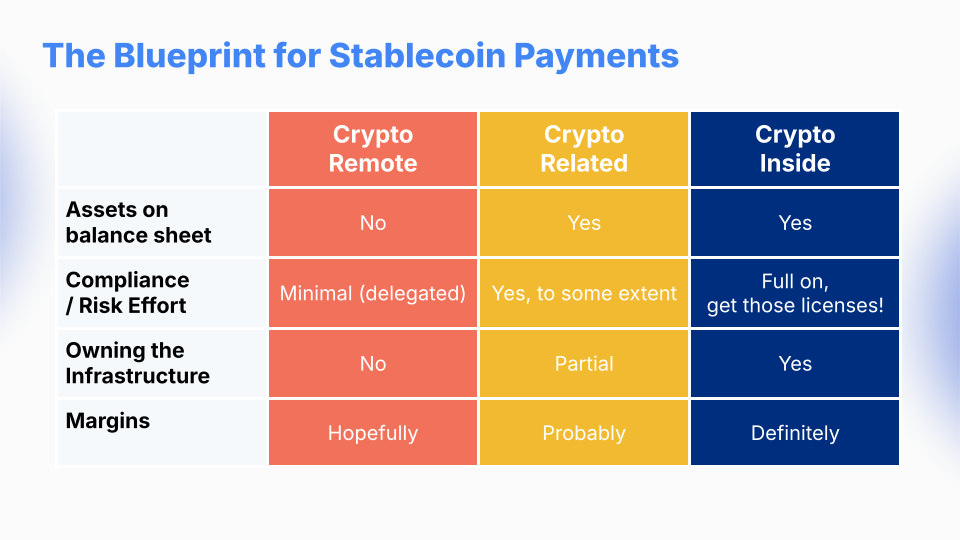
Building Private Stablecoin Infrastructure for B2B Settlement works best as a clear sequence: define the constraint, compare the realistic options, test the tradeoff, and choose the path with the fewest hidden costs. That order keeps the advice usable instead of decorative. After each step, pause long enough to check whether the recommendation still fits the reader's actual situation. If it depends on perfect timing, unusual access, or a best-case budget, include a simpler fallback.
Monitor transaction integrity continuously
Privacy in private stablecoin infrastructure is a feature, not a loophole. You cannot audit what you do not track. While off-chain ledgers keep commercial details hidden from the public blockchain, your internal systems must maintain a complete, immutable record of every settlement. This dual-layer approach satisfies regulatory requirements for transparency without exposing sensitive business data to competitors or the public.
Implement real-time anomaly detection
Set up automated monitoring tools that flag unusual transaction patterns immediately. High-value transfers between new counterparties, rapid successive movements, or transactions involving high-risk jurisdictions should trigger alerts. These systems act as your first line of defense, identifying potential money laundering or fraud before funds leave your custody. Integrate these checks directly into your transaction execution layer so that suspicious activity is halted for manual review.
Maintain a private audit trail
Regulators do not need to see your entire ledger, but they do need to verify compliance. Create a separate, secure audit log that records metadata for all transactions: timestamps, counterparty identities (KYC-verified), amounts, and compliance status. This log must be tamper-proof and readily accessible for examination. Think of this as a shadow ledger—it mirrors the private transactions but strips away the sensitive commercial context, providing exactly what auditors need to verify integrity.
Conduct regular compliance reconciliation
Schedule periodic audits to reconcile your private ledger with your reserve accounts and internal compliance records. This ensures that the "privacy" layer has not obscured any discrepancies. Engage third-party auditors familiar with private blockchain environments to review your monitoring protocols annually. Their validation provides confidence to regulators that your infrastructure is robust and that privacy is not being used to shield illicit activity.
Frequently asked questions about private stablecoins
Private stablecoin infrastructure for B2B settlement raises specific regulatory and technical questions. These answers address the high-stakes concerns regarding compliance, chain selection, and custody risks.
Helpful gear
Use these product recommendations as a starting point, then choose the size, material, and price point that fit how you actually use the gear.
- Good starting point
- Matches the article topic

As an Amazon Associate, we may earn from qualifying purchases.
No comments yet. Be the first to share your thoughts!