The hidden constraints of private stablecoin infrastructure
Private stablecoins are issued by non-government entities, meaning they lack the explicit backing of a central bank. This distinction creates a specific set of operational risks that institutional settlement layers must navigate. Unlike CBDCs, these assets rely on the solvency and transparency of the issuing fintech or crypto firm.
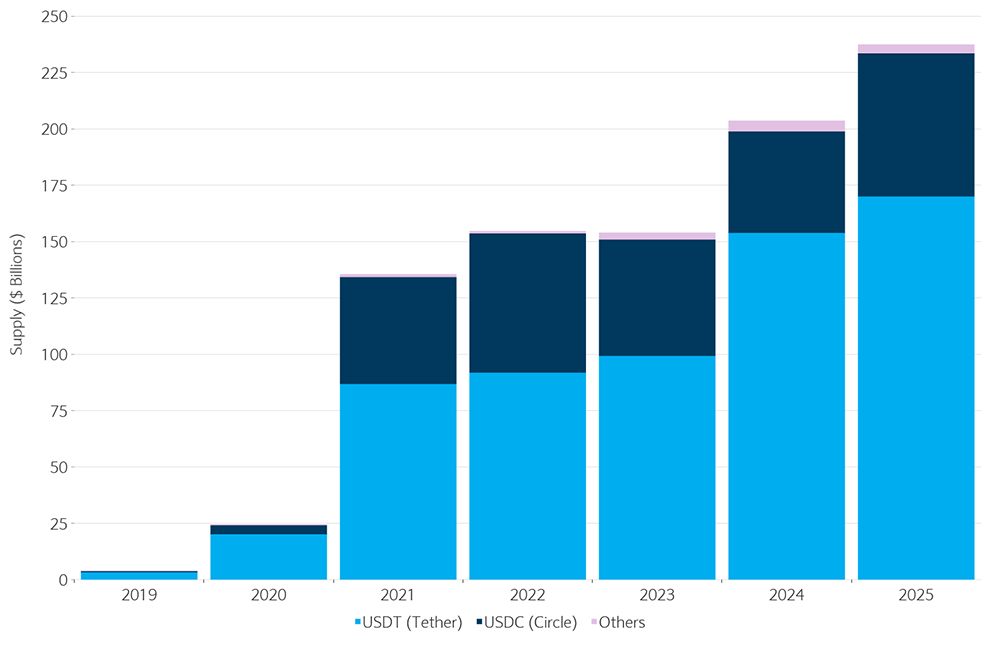
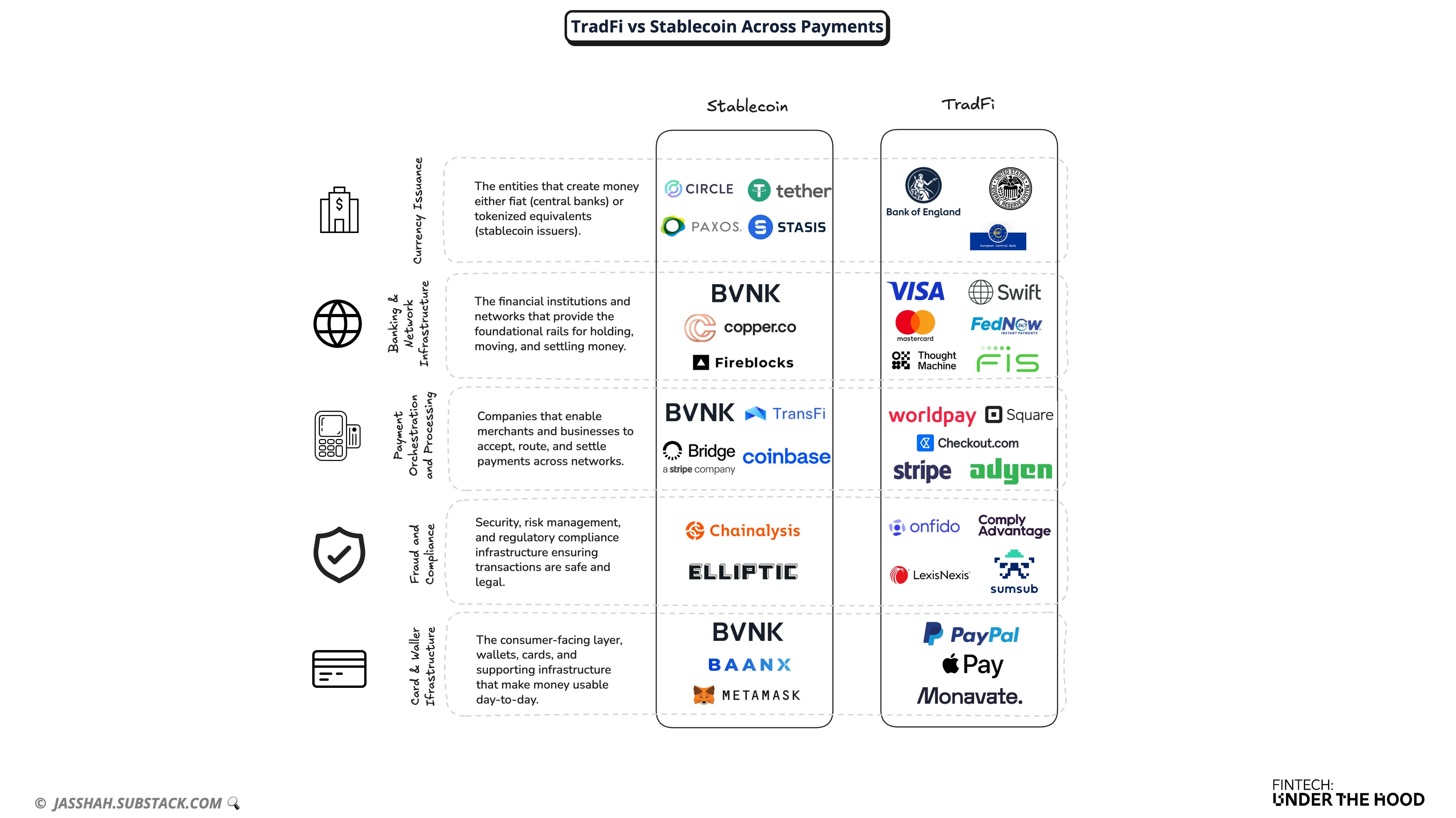
Stablecoin infrastructure is the backend plumbing that connects traditional business operations to digital currency payments. It includes the technical systems, APIs, wallets, and protocols required to accept, hold, and send tokens at scale. For institutions, the goal is to leverage real-time settlement across geographies while cutting out intermediaries that run on traditional banking hours.
The tradeoff is clear: you gain 24/7 blockchain rails and lower costs, but you assume counterparty risk. McKinsey notes that while tokenized cash offers instant payments and end-to-end traceability, it requires rigorous oversight of the underlying reserve assets. Institutional players must therefore build infrastructure that not only moves value but also verifies the integrity of the stablecoin issuer in real time.
Private stablecoin infrastructure choices that change the plan
Building a settlement layer for private stablecoins requires balancing speed, cost, and compliance. Unlike traditional banking rails, tokenized cash moves across geographies in real time, cutting out intermediaries and reducing settlement lag [src-1]. However, this efficiency introduces new risks around liquidity management, regulatory reporting, and counterparty visibility.
Institutions must evaluate how these assets interact with existing treasury systems. The choice between public-chain settlement and private ledgers dictates your exposure to public data and your ability to maintain programmable privacy [src-3]. Below, we break down the critical factors that determine whether a stablecoin infrastructure meets institutional-grade standards.
| Factor | Settlement Speed | Transaction Cost | Compliance & Privacy | Liquidity Access |
|---|---|---|---|---|
1. Settlement Finality and Speed
Tokenized payments are typically nearly instant, offering a significant advantage over traditional ACH or wire transfers [src-2]. For high-volume institutional settlement, this speed reduces capital tie-up and improves cash flow visibility. However, finality on public blockchains can vary by network congestion, whereas private ledgers offer deterministic finality at the cost of broader network effects.
2. Cost Structure and Transparency
Stablecoin infrastructure relies on decentralized networks to move value, often incurring lower marginal costs than legacy banking fees [src-4]. Yet, "low cost" is relative. Institutions must account for gas fees, custody fees, and the operational cost of maintaining compliance APIs. Public chains expose transaction data, which can be a compliance liability without additional privacy protocols.
3. Compliance and Programmable Privacy
Private stablecoins allow for programmable privacy, meaning pricing, counterparties, and strategies remain hidden from the public ledger [src-3]. This is critical for institutions that cannot disclose trading strategies or client data. However, this opacity requires robust internal audit trails to satisfy regulators. The infrastructure must balance on-chain transparency with off-chain privacy controls.
4. Liquidity and Counterparty Risk
Public stablecoins benefit from deep, decentralized liquidity pools, reducing slippage for large transactions. Private stablecoins, however, are often limited to a closed consortium, which can restrict liquidity during stress events. Institutions must assess the counterparty risk of the issuer and the depth of the secondary market for redemption.
5. Integration Complexity
The backend plumbing connecting traditional business operations to digital currency payments is non-trivial. APIs must handle wallet management, transaction signing, and real-time reconciliation. Public-chain infrastructure offers more standardized APIs, while private ledgers may require custom integration, increasing development time and maintenance overhead.
Choose the next step
Private Stablecoin Infrastructure works best as a clear sequence: define the constraint, compare the realistic options, test the tradeoff, and choose the path with the fewest hidden costs. That order keeps the advice usable instead of decorative. After each step, pause long enough to check whether the recommendation still fits the reader's actual situation. If it depends on perfect timing, unusual access, or a best-case budget, include a simpler fallback.
Spot Weak Options in Private Stablecoin Infrastructure
Private stablecoins are issued by fintech companies and decentralized protocols, not governments. This structure offers speed and lower costs, but it introduces specific risks for institutional settlement. You must distinguish between robust infrastructure and misleading claims.
Ignore "Instant" Without Traceability
Stablecoin payments are nearly instant, but speed is useless without end-to-end visibility. Some vendors promise real-time settlement while hiding the audit trail. If you cannot trace the on-chain flow, you do not have settlement; you have a black box. Prioritize providers that expose full transaction logs, not just final balances.
Reject Opaque Reserve Claims
A common mistake is assuming all reserves are equal. Private issuers hold assets in cash, commercial paper, or private credit. These are not equivalent. Cash reserves offer immediate liquidity, while private credit carries default risk. Always verify the exact composition of the reserve. Do not rely on summary reports; demand quarterly attestation of the underlying assets.
Watch for Hidden Intermediaries
True stablecoin infrastructure cuts out intermediaries by running on 24/7 blockchain rails. If a provider requires multiple manual approvals or legacy banking hops for every transaction, you are not using efficient infrastructure. You are paying for legacy friction. Demand direct API access to the blockchain layer to ensure the promised efficiency is real, not theoretical.
Private stablecoin infrastructure: what to check next
Helpful gear
Use these product recommendations as a starting point, then choose the size, material, and price point that fit how you actually use the gear.
- Good starting point
- Matches the article topic

As an Amazon Associate, we may earn from qualifying purchases.
No comments yet. Be the first to share your thoughts!