Defining the private stablecoin strategy
A private stablecoin strategy centers on using permissioned digital currencies to manage treasury operations and settlements without exposing sensitive financial data to the public. Unlike public stablecoins, where every transaction is visible on a blockchain explorer, private variants restrict transaction visibility to authorized parties. This privacy layer is essential for enterprises that must comply with strict regulatory standards or protect competitive intelligence regarding cash flow and counterparty relationships.
Public ledgers offer transparency, but that openness can be a liability for corporate finance teams. When a company issues a payment, competitors or market analysts can trace the flow of funds, revealing strategic moves or liquidity positions. Private stablecoins solve this by keeping the ledger’s content confidential while still leveraging the efficiency and speed of blockchain technology. As noted by industry players like Canton Network, this approach allows institutions to tokenize cash and deposit tokens for real capital markets use cases while maintaining the necessary privacy controls.
For most enterprises, the choice isn't about choosing between blockchain and traditional banking, but rather selecting the right tool for the job. Public stablecoins are ideal for customer-facing applications where transparency builds trust. Private stablecoins are the backbone of internal treasury management, inter-company settlements, and institutional liquidity pools. By adopting a private stablecoin strategy, organizations can achieve the speed of digital assets without sacrificing the confidentiality required in high-stakes financial environments.



As an Amazon Associate, we may earn from qualifying purchases.
Choose the right settlement layer for your stablecoin
Building a private stablecoin strategy starts with deciding where the money actually moves. You generally have two paths: issuing on a permissioned ledger built for institutional privacy, or tokenizing traditional bank deposits to run on public chains. The right choice depends on whether your priority is absolute data secrecy or access to deep public liquidity.
Permissioned ledgers for institutional privacy
Permissioned networks like Canton Network are designed specifically for institutional use cases where privacy is non-negotiable. These systems allow you to tokenize and move cash—including stablecoins and deposit tokens—on-chain while keeping transaction data hidden from the broader network. This approach is ideal for treasury operations and capital markets where competitors or the public cannot see your balance or trade flow.
The trade-off is liquidity. Because these networks are closed, you cannot easily tap into the vast depth of decentralized exchanges (DEXs) found on public chains. Settlement speed is often faster and more predictable, but you are building a walled garden where you control the rules and the participants.
Tokenized deposits on public chains
Alternatively, you can use tokenized deposits to bring traditional banking rails onto public blockchains. This method leverages the existing infrastructure of banks while gaining the programmability and global reach of public chains like Ethereum or Solana. It allows for real-time settlement and access to public liquidity pools, which is crucial for large-scale cross-border payments.
However, this approach requires careful navigation of regulatory frameworks. Since the underlying asset is a bank deposit, you must ensure compliance with reserve requirements and banking regulations in every jurisdiction you operate. The privacy layer is often less granular than on permissioned ledgers, meaning transaction metadata may be visible on-chain unless additional zero-knowledge proofs are implemented.
Comparison: Permissioned vs. Public Infrastructure
| Feature | Permissioned Ledger (e.g., Canton) | Tokenized Deposits (Public Chains) |
|---|---|---|
| Data Privacy | High (Transaction data hidden) | Medium (On-chain visibility) |
| Liquidity Access | Limited (Closed ecosystem) | High (Public DEXs & markets) |
| Regulatory Fit | Tailored for institutional rules | Requires banking compliance |
| Settlement Speed | Fast & Predictable | Fast (Depends on chain) |
| Network Effects | Low (Invite-only) | High (Global reach) |
Market Context
While you build your private strategy, it is useful to monitor the broader stablecoin market to understand liquidity trends and regulatory shifts. The following chart shows the general market health of major stablecoins, which often correlates with institutional adoption rates.
Security and Infrastructure Tools
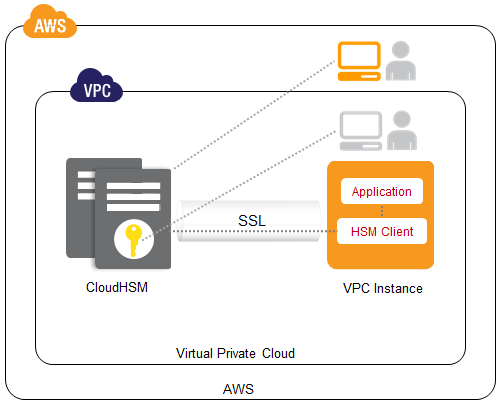
Securing your private stablecoin infrastructure requires robust hardware and software solutions. Whether you are managing private keys for a permissioned ledger or integrating with public chain nodes, the following tools are essential for enterprise-grade security.


As an Amazon Associate, we may earn from qualifying purchases.
Market research and adoption signals
The stablecoin market has moved past the phase of pure retail speculation. With a market capitalization hovering around $220 billion, the asset class has shown an 8% growth over a recent 30-day period, signaling sustained institutional interest rather than fleeting hype [[src-serp-6]]. This expansion is driven by a shift toward settlement use cases, where the stability of fiat-pegged assets combines with the efficiency of crypto infrastructure [[src-serp-2]].
For enterprise teams, this shift means treating stablecoins as a settlement layer rather than a speculative vehicle. The focus is now on reliability, regulatory compliance, and integration with existing treasury systems. A private stablecoin strategy must account for these evolving use cases, ensuring that the chosen assets align with broader financial goals.

To understand the underlying liquidity and stability of these assets, monitoring major stablecoins like USDC or USDT is essential. Their price action and volume provide a barometer for market confidence and settlement capacity.
Regulatory and compliance considerations
Building a private stablecoin strategy requires navigating a complex web of financial regulations. Unlike public networks, private implementations demand strict adherence to jurisdictional rules, particularly regarding Know Your Customer (KYC) and Anti-Money Laundering (AML) protocols. Enterprises must treat compliance not as an afterthought, but as a foundational layer of the token architecture.
The legal status of tokenized assets remains a primary hurdle. In many jurisdictions, stablecoins are classified as money transmitters or electronic money, triggering licensing requirements similar to traditional banks. This classification dictates who can hold, transfer, or redeem tokens. Failure to align with local securities or banking laws can result in severe penalties or operational shutdowns. Financial institutions must engage legal counsel early to map out the specific regulatory landscape of their target markets.
Implementing robust identity verification is essential for maintaining regulatory standing. Automated KYC checks ensure that only verified participants can access the stablecoin network, reducing the risk of illicit activity. This process involves validating government-issued IDs and screening against sanctions lists. For private stablecoins, this verification is often integrated directly into the wallet or smart contract level, ensuring that every transaction originates from a known entity.
As you evaluate these requirements, consider the broader market context. Regulatory clarity often correlates with market stability and institutional adoption. Monitoring how major financial assets perform under current regulatory scrutiny can provide insights into the potential trajectory of your private stablecoin initiative.
For enterprises looking to secure their operations, investing in compliant infrastructure is critical. This includes secure hardware for key management and software solutions that support regulatory reporting. Selecting vendors with proven track records in financial compliance can mitigate risk and ensure long-term viability.

As an Amazon Associate, we may earn from qualifying purchases.
Launching the private stablecoin strategy
Moving from strategy to implementation requires a phased approach that balances speed with rigorous risk controls. Start by selecting a partner ecosystem that supports multi-network flexibility. A robust private stablecoin strategy should allow your enterprise to switch networks or pause usage if regulatory conditions shift, ensuring you are not locked into a single infrastructure provider.
Once partners are selected, define the technical architecture for your pilot. This involves setting up private channels for high-frequency users to generate wallet addresses on demand, which streamlines settlement and reduces on-chain clutter. Ensure your internal systems can handle the necessary compliance checks before tokens hit the public ledger.
Limit the initial pilot to a specific use case, such as B2B payments within a trusted supplier network. This containment allows your team to test settlement speeds and reconciliation processes without exposing the broader organization to unnecessary volatility or operational risk.

Choose infrastructure providers that offer multi-chain support. The ability to move assets across different blockchains ensures your private stablecoin strategy remains agile. Look for partners who provide clear API documentation and dedicated support for enterprise-grade compliance reporting.
Implement payment channels for frequent users. This allows counterparties to save wallet details and transact off-chain or with minimal on-chain footprint, significantly reducing gas costs and settlement times while maintaining the auditability required for enterprise finance.

Deploy monitoring tools to track transaction flows and liquidity in real time. Use live market data to ensure your stablecoin reserves remain fully backed and pegged correctly during the pilot phase, providing the transparency needed for internal and external audits.
Frequently asked questions about private stablecoin strategies
Private stablecoins operate differently from their public counterparts, and understanding the nuances is essential for enterprise adoption. Here are answers to the most common questions regarding types, profitability, and regulatory dynamics.
What are the main types of stablecoins?
Stablecoins generally fall into four categories, each with distinct risk profiles for enterprise treasuries. Fiat-collateralized stablecoins (like USDC) are backed 1:1 by cash in bank accounts. Crypto-collateralized stablecoins (like DAI) are over-collateralized by other digital assets. Commodity-backed stablecoins are pegged to physical assets like gold. Finally, algorithmic stablecoins use code to manage supply and demand without direct collateral, making them the riskiest option for institutional use.
How can enterprises make money from stablecoins?
Profitability in a private stablecoin strategy often comes from yield generation rather than speculation. By holding stablecoins in regulated, interest-bearing accounts or lending them through compliant DeFi protocols, companies can earn yields that often exceed traditional cash management tools. Additionally, private stablecoins can reduce cross-border settlement costs, effectively increasing net profitability by minimizing friction and intermediary fees.
Why are traditional banks often opposed to stablecoins?
Banks have historically resisted stablecoins because they threaten the traditional payment rails and deposit models that generate bank revenue. If companies move cash off-balance-sheet into stablecoins, banks lose the float and lending opportunities associated with those deposits. Also, regulatory uncertainty and compliance costs make many institutions cautious, though this stance is shifting as banks begin to offer stablecoin custody and issuance services themselves.
Is XRP considered a stablecoin?
No, XRP is not a stablecoin. It is a digital asset designed for fast, low-cost cross-border settlements, but its price fluctuates significantly against fiat currencies. Unlike stablecoins, which maintain a peg to a specific asset (usually the US dollar), XRP’s value is determined by market supply and demand, making it unsuitable as a store of value for enterprises seeking price stability.
No comments yet. Be the first to share your thoughts!