Define settlement requirements first
Before writing a single line of code or selecting a blockchain, you must map the exact operational needs of your settlement network. Private stablecoin infrastructure exists to solve specific institutional friction points—primarily the conflict between public ledger transparency and the strict confidentiality required by counterparties. Unlike retail stablecoins, which broadcast transaction details to the entire world, private infrastructure allows institutions to move value without exposing pricing, counterparty relationships, or trading strategies.
As noted by McKinsey, stablecoins enable payments between wallet addresses without requiring the owners to open traditional bank accounts, offering a direct path to next-generation payments. However, for high-stakes finance, this efficiency is useless if it compromises competitive advantage. Canton Network highlights that private stablecoins provide "need-to-know" privacy, allowing programmable privacy while maintaining complete composability with existing financial rails. Your first task is to identify which data points must remain hidden from the public ledger and which can be visible for regulatory audit.
Start by listing the three core settlement scenarios your infrastructure must support: vendor payments, payroll, and cross-border obligations. For each scenario, define the privacy threshold. Does the counterparty need to see the full amount? Do regulators need to see the origin of funds? Document these requirements clearly. This baseline determines whether you need a permissioned ledger, a zero-knowledge proof layer, or a private shard of a public chain. Without this clarity, you risk building a system that is either too opaque for compliance or too transparent for business.
Select the right infrastructure stack
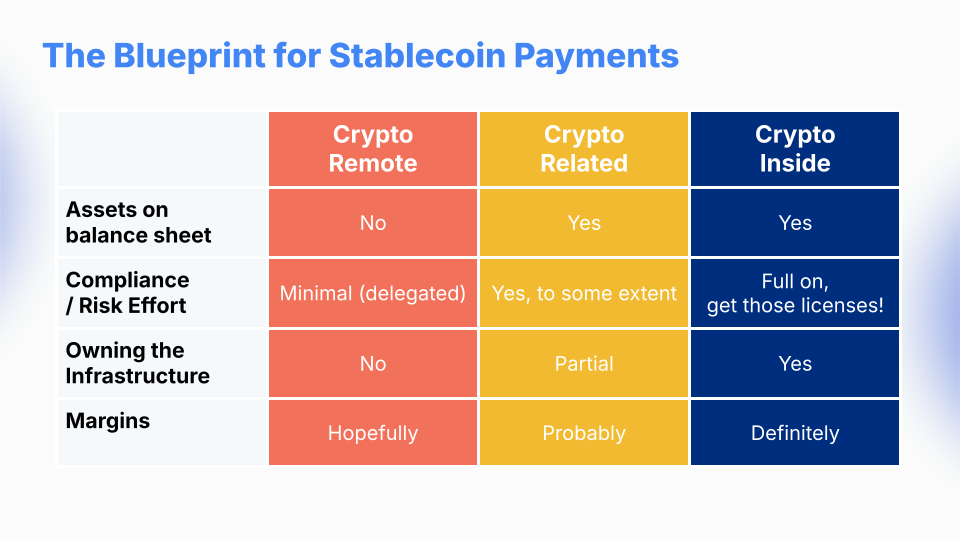
Building private stablecoin infrastructure requires more than just a token contract; it demands a cohesive stack of blockchain, oracles, and custody solutions that operate behind a privacy veil. For institutional settlement, the goal is to move value without exposing counterparty identities or transaction amounts to the public ledger. This section walks you through the technical decisions needed to assemble a stack that meets compliance standards while maintaining the speed required for high-volume payments.
Public blockchains like Ethereum or Solana offer liquidity but expose all transaction data. For institutional use, you need a layer that supports "need-to-know" privacy. Canton Network is a leading example of a blockchain designed for private institutional payments, allowing settlement without exposing strategies or counterparties. Alternatively, consider permissioned Layer 2 solutions or zero-knowledge rollups that can mask transaction details while proving validity to regulators.
Stablecoins must maintain a peg to fiat currencies, which requires real-time, tamper-proof price data. Chainlink is the industry standard for decentralized oracle networks, providing the off-chain data infrastructure necessary to keep your stablecoin stable. Ensure your oracle integration supports multi-source aggregation to prevent single points of failure. This step is critical for maintaining the integrity of your private stablecoin infrastructure against market volatility.
You cannot manage institutional funds with standard hot wallets. Fireblocks and similar platforms offer multi-party computation (MPC) custody solutions that distribute key management across multiple parties, eliminating single points of compromise. These platforms also provide API access for automated settlement workflows, allowing your stablecoin infrastructure to interact seamlessly with traditional banking rails for fiat on-ramps and off-ramps.
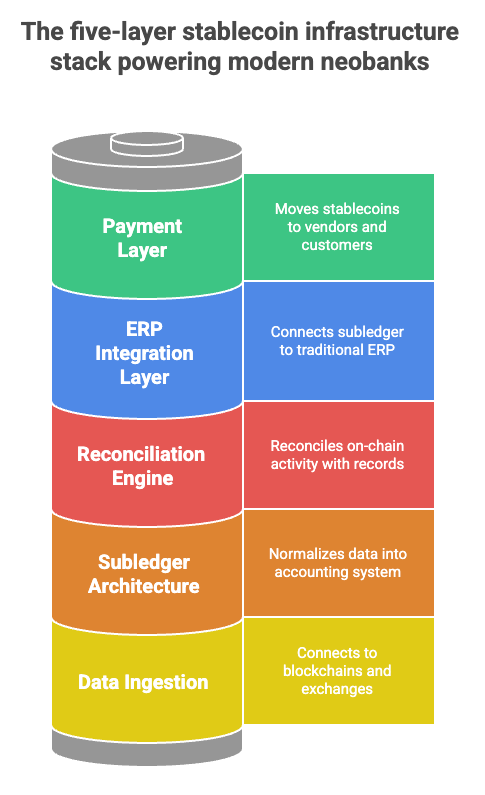
Bridge and similar infrastructure providers offer end-to-end APIs that abstract the complexity of blockchain interactions. These APIs allow your internal systems to receive, store, convert, and spend stablecoins without needing deep expertise in smart contract development. A unified API layer ensures that your private stablecoin infrastructure can scale to handle thousands of transactions per second while maintaining a consistent user experience for internal stakeholders.

Before launching, engage third-party auditors to review your smart contracts and custody solutions. Ensure your infrastructure meets regulatory requirements for anti-money laundering (AML) and know-your-customer (KYC) checks. This step is not optional; it is the foundation of trust for institutional clients who require proof that your private stablecoin infrastructure is secure and compliant.


As an Amazon Associate, we may earn from qualifying purchases.
Implement privacy and compliance controls
Balancing regulatory transparency with transactional privacy is the central challenge of private stablecoin infrastructure. Institutional settlement requires a dual-layer approach: the network must verify identities for compliance while keeping specific transaction details hidden from public view. This separation allows institutions to meet KYC/AML obligations without exposing sensitive pricing, counterparty relationships, or trading strategies to the broader market.
To achieve this, you must architect your system around "need-to-know" privacy. Rather than relying on pseudonymity, which is insufficient for institutional compliance, use permissioned access controls that restrict data visibility to authorized participants only. Platforms like Canton Network demonstrate this model by enabling programmable privacy on public blockchains. This ensures that while the ledger remains secure and immutable, sensitive commercial data remains confidential to the involved parties.
1. Integrate KYC/AML at the Issuer Level
Compliance begins with the stablecoin issuer. Implement rigorous identity verification protocols before any tokens are minted or transferred. This step ensures that every participant in the network is vetted against sanctions lists and knows their customer. By anchoring compliance at the issuance layer, you create a trusted baseline for all subsequent transactions.
2. Configure Transaction-Level Privacy
Once the network is established, configure privacy controls at the transaction level. Use zero-knowledge proofs or channel-based architectures to hide transaction amounts and counterparties from the general public. This allows institutions to settle payments and manage liquidity without revealing their financial positions or strategic intentions to competitors or the public market.
3. Enable Selective Data Sharing for Auditors
Regulators and auditors require visibility into compliance, not necessarily into commercial strategy. Implement role-based access controls that allow auditors to view transaction hashes and compliance flags without seeing the underlying business data. This satisfies regulatory transparency requirements while preserving the competitive advantage that privacy provides.
4. Monitor and Audit Access Logs
Privacy controls are only effective if access is strictly monitored. Maintain immutable logs of who accessed what data and when. This audit trail is critical for demonstrating compliance to regulators and for detecting internal security breaches. Regular audits ensure that privacy boundaries are not inadvertently breached by misconfigured smart contracts or user error.
Analyze market viability and costs
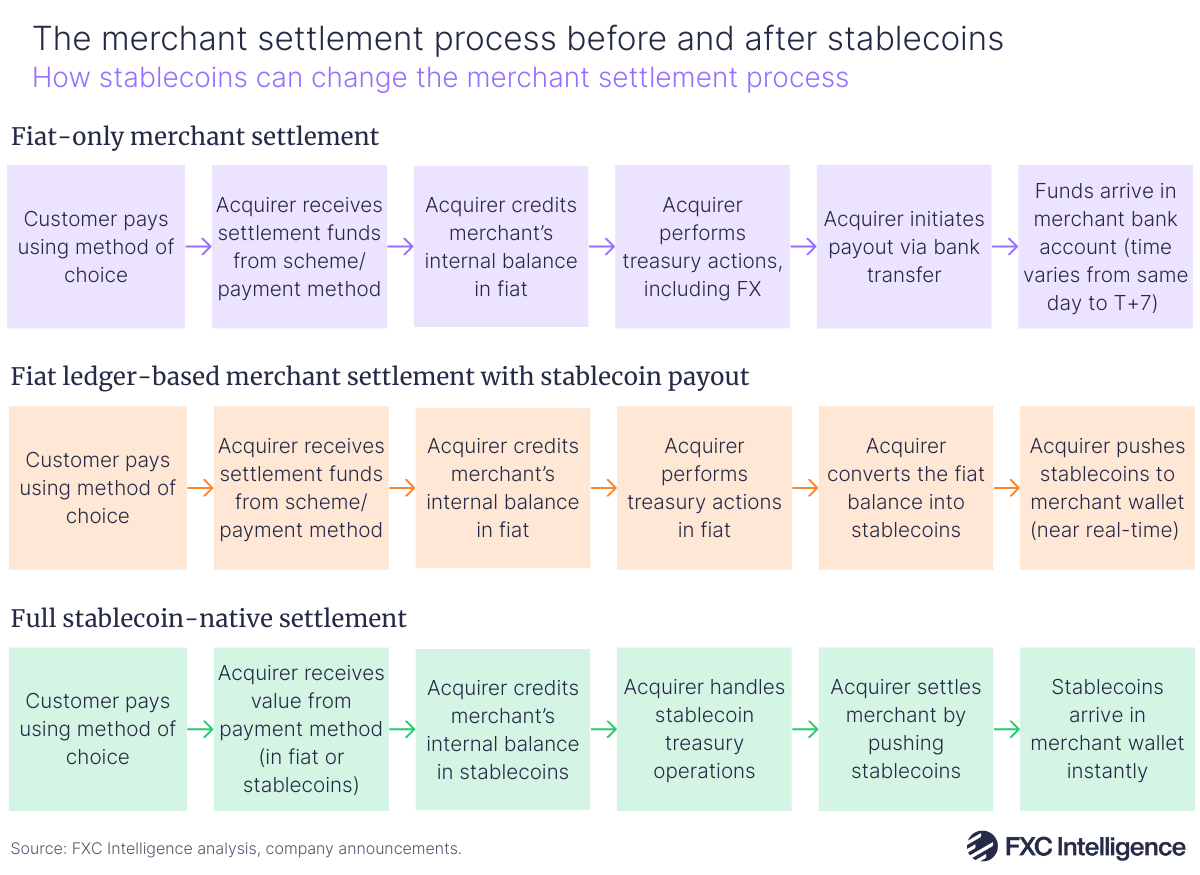
Before committing capital to private stablecoin infrastructure, you need to stress-test the financial model against existing settlement rails. The shift from legacy SWIFT or ACH systems to blockchain-based settlement isn't just a technology upgrade; it is a fundamental restructuring of working capital and operational overhead.
According to Morgan Stanley, stablecoins modernize financial infrastructure by leveraging blockchain to reduce settlement times from days to seconds. This speed directly impacts capital efficiency. When funds settle instantly, institutions can redeploy that capital much faster, effectively increasing the velocity of money within your treasury operations. Canton Network further highlights that privacy-enabled stablecoins allow for institutional-scale settlement without exposing counterparty data, which is critical for maintaining competitive advantage in high-stakes finance.
To evaluate whether this infrastructure makes financial sense, compare the total cost of ownership against traditional methods. The table below outlines the key differentiators in speed, cost structure, and privacy that drive viability.
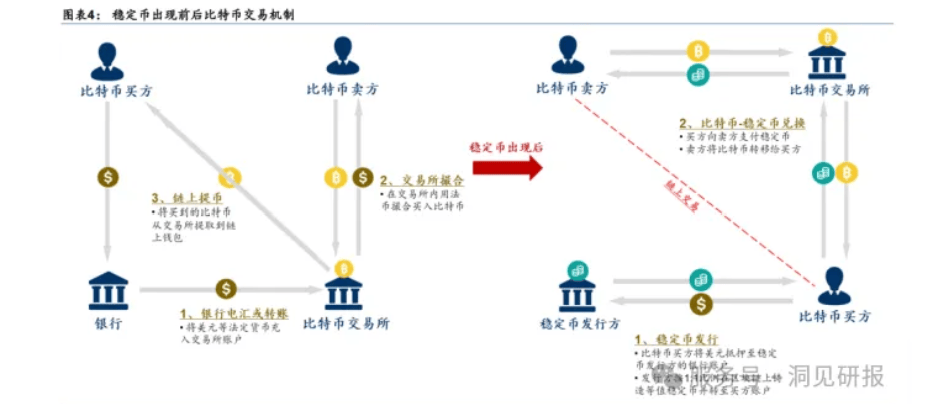
The data suggests that while initial setup costs for private stablecoin infrastructure are higher, the long-term operational savings and capital efficiency gains typically outweigh the legacy rail expenses. Focus your analysis on the net present value of freed-up working capital rather than just the transaction fee differential.
Test the settlement workflow
Before going live, you need to prove that your private stablecoin infrastructure can handle real-world pressure. A pilot program is not just a formality; it is the only way to catch latency issues, compliance friction, and liquidity gaps before they impact actual institutional clients.
Follow this sequence to validate the end-to-end flow:
Execute a full cycle of token minting, transfer, and redemption between test wallets. Verify that the smart contracts execute without reverts and that the settlement finality matches your target latency. This confirms the core plumbing works under load.
Test the "need-to-know" privacy features. Ensure that counterparty details, transaction amounts, and trading strategies remain hidden from unauthorized nodes while remaining verifiable to regulators. This is critical for institutional adoption where data sovereignty is non-negotiable.
Simulate high-volume redemption requests to ensure your reserve management system can process withdrawals instantly. Confirm that the bridge between the stablecoin ledger and the underlying fiat reserve bank account does not bottleneck during peak settlement windows.
Once these tests pass, you have a validated foundation for scaling. The goal is to remove uncertainty, ensuring that when you deploy to production, the infrastructure behaves predictably and securely.
Frequently asked questions about private stablecoin infrastructure
Private stablecoin infrastructure addresses specific institutional needs for privacy, compliance, and capital efficiency that public stablecoins often cannot meet. Below are answers to common questions about how these systems work and where they fit in modern finance.
No comments yet. Be the first to share your thoughts!