Map your settlement requirements
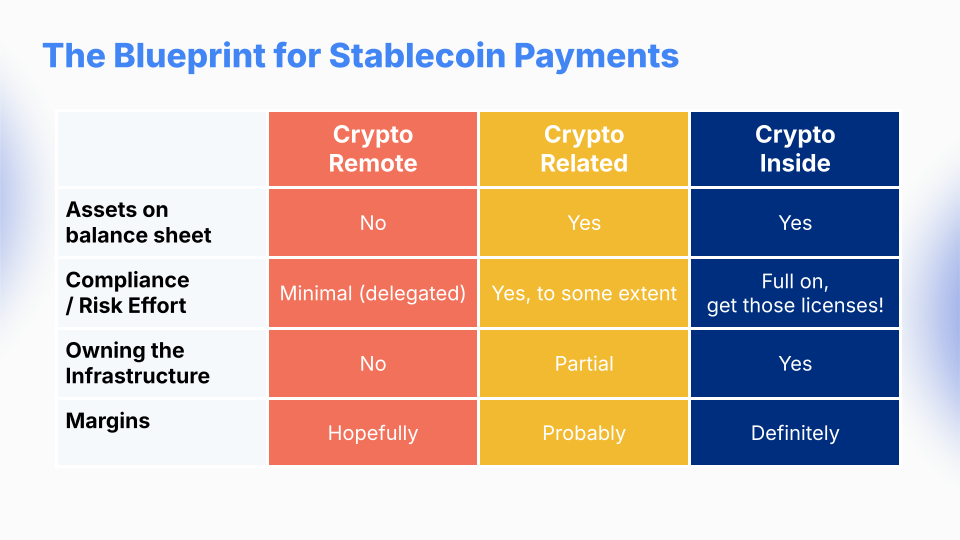
Before selecting a blockchain or a custodian, you must define exactly how your business moves value. Private stablecoin infrastructure is not a one-size-fits-all solution; it is a stack that must align with your specific operational rhythm. Whether you are processing cross-border payroll, managing corporate treasury reserves, or settling B2B invoices, the technical and compliance needs differ significantly.
Start by identifying the primary use case. For cross-border payments, latency and finality are paramount. You need infrastructure that settles in seconds, not days, while navigating varying regulatory jurisdictions. For treasury management, the focus shifts to yield generation, liquidity access, and strict audit trails. The infrastructure must support programmable privacy, allowing you to move value without exposing pricing, counterparties, or trading strategies on public ledgers.
Once the use case is clear, map the technical requirements. This includes selecting the underlying blockchain network, determining custody solutions (hot vs. cold storage), and integrating compliance tooling such as KYC/AML checks. Consider the APIs your engineering team will need to interact with the stablecoin ecosystem. The goal is to build a system that is not only compliant but also efficient enough to handle your transaction volume without becoming a bottleneck.
Finally, evaluate the counterparty risks. Who issues the stablecoin? What are the reserve backing mechanisms? For private stablecoins, the issuer is often a fintech or a specialized financial institution rather than a decentralized protocol. Ensure the issuer has a robust reserve management framework and transparent reporting. This due diligence protects your business from de-pegging events and regulatory scrutiny, ensuring your infrastructure remains resilient over the long term.
Select the right infrastructure provider
Choosing a vendor is less about finding a generic wallet and more about integrating a financial operating system. You need a partner that handles the heavy lifting of custody, compliance, and API stability so your engineering team can focus on the product. The market has consolidated around a few key players who offer distinct advantages depending on your specific operational needs.
| Provider | Custody Solution | Compliance & Reporting | API & Integration |
|---|---|---|---|
| Fireblocks | Multi-party computation (MPC) vaults | Institutional-grade audit trails, granular role-based access | RESTful APIs for treasury management and payment execution |
| Ripple | Custodial and non-custodial options via network | Built-in regulatory checks for cross-border flows | Low-latency APIs for real-time settlement and liquidity |
| Stripe | Integrated via USDB (Bridge) and partner custodians | Automated KYC/AML, standard financial reporting | Developer-friendly REST APIs, familiar Stripe SDKs |
Fireblocks is the default choice for organizations prioritizing security and granular control. Their multi-party computation (MPC) architecture removes single points of failure, which is critical when moving large volumes of stablecoin value. If your primary concern is preventing internal fraud and managing complex approval workflows, their API suite for treasury management is the industry standard.
Ripple offers a different angle, focusing on the speed and liquidity of cross-border stablecoin payments. Their infrastructure is deeply integrated with the payment rails themselves, making it ideal if your stablecoin strategy involves international settlements or FX conversion. The API is optimized for low-latency transactions rather than complex treasury management.
Stripe provides the most frictionless entry point for existing financial ecosystems. By leveraging USDB and their established treasury infrastructure, Stripe allows you to accept and send stablecoins using APIs that your developers likely already know. This reduces the learning curve and integration time, though it offers less customization for complex custody structures compared to Fireblocks.
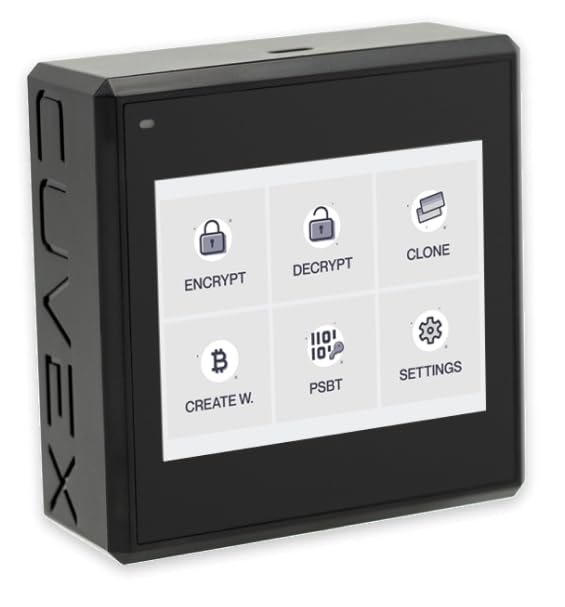


As an Amazon Associate, we may earn from qualifying purchases.
When evaluating these providers, look beyond the marketing. Check their SOC 2 Type II reports and review their incident history. A provider with a flawless API is useless if their custody solution has a history of breaches. Prioritize the vendor that aligns with your risk tolerance and technical maturity.
Integrate custody and compliance layers
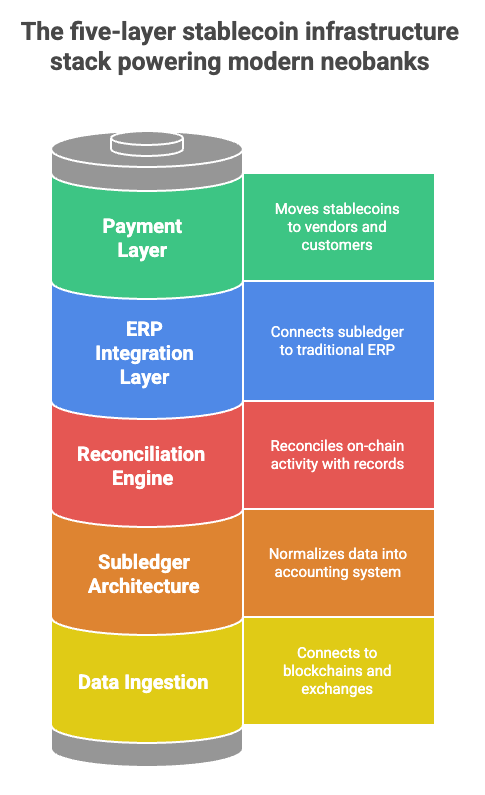
Building a private stablecoin rail isn't just about moving tokens; it's about moving money with institutional-grade trust. You need to lock down the assets before you ever touch the payment logic. This means wiring up secure custody solutions and automated compliance tooling directly into your payment rail.
Think of custody as the vault and compliance as the security guard. If one fails, the whole operation stops. Here is how to wire them together.
Start by choosing a custodian that supports multi-party computation (MPC) or threshold signature schemes. These technologies split key management across multiple parties, removing single points of failure. Look for providers that offer institutional-grade insurance and clear audit trails. This is the foundation of your asset security.
Integrate a compliance API that runs before any transaction settles. This tool should screen wallets against sanction lists and verify user identities in real time. If a transaction fails the screen, block it immediately. Do not rely on manual reviews for high-volume rails; automation is the only way to maintain speed while staying compliant.
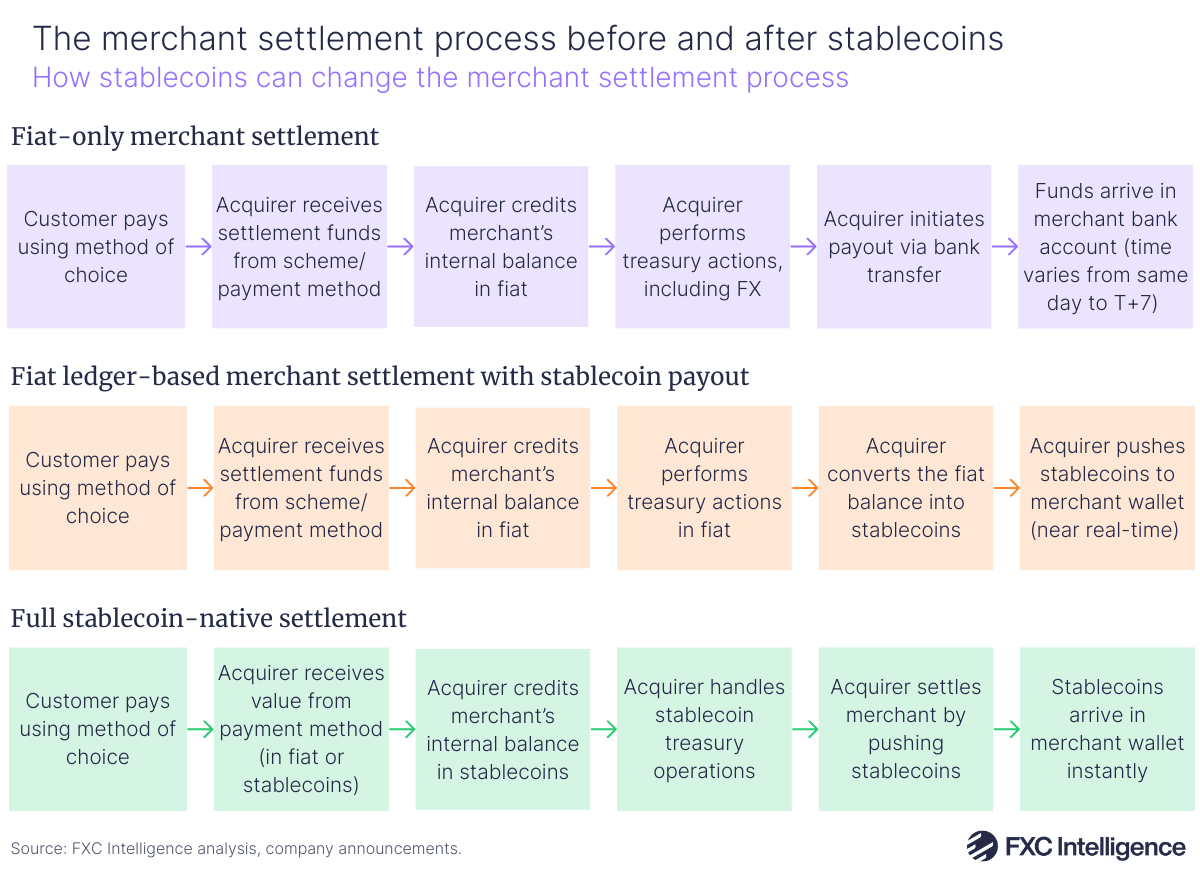
Use the official APIs from major issuers like Circle or Tether to handle minting and burning. This ensures your stablecoin supply is always backed by the underlying fiat reserves. Direct integration reduces settlement risk and gives you real-time visibility into your liability. This step turns your internal ledger into a true payment rail.

Deploy monitoring tools that flag suspicious patterns as they happen. This includes rapid movement of funds, transactions with known high-risk addresses, or unusual transaction sizes. Your compliance team should receive alerts instantly, allowing for immediate intervention. This layer protects your business from accidental regulatory breaches.
Before going live, perform rigorous penetration testing on your custody and compliance interfaces. Simulate attacks on your key management systems and stress-test your compliance APIs under high load. Verify that your fail-safes work correctly. This is not optional; it is the final check before you expose your infrastructure to the public.
Monitor market liquidity and reserves
Stablecoins began as a liquidity layer for decentralized finance, but they have evolved into a critical component of global financial infrastructure. To build a private stablecoin that users trust, you must prove that the token is backed by real assets and that it can be traded without crashing the price. This section covers how to track the health of your stablecoin ecosystem, focusing on reserve backing and liquidity depth to mitigate counterparty risk.
Track reserve composition and attestations
Your stablecoin’s value rests entirely on the assets held in reserve. Users and regulators need to know that every token in circulation is matched by a high-quality asset, such as cash or short-term government bonds. You should publish regular attestations from independent accounting firms to verify these holdings. Transparency here is not optional; it is the foundation of trust.
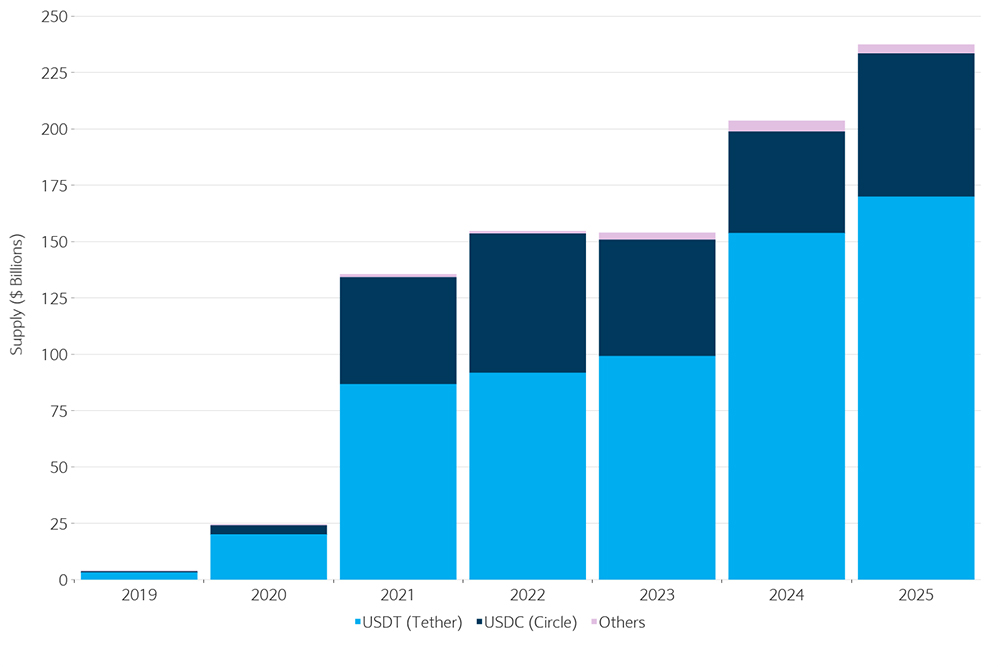
If your stablecoin is issued by a private entity, like Circle with USDC or Tether with USDT, the burden of proof is even higher. You must ensure that the reserve assets are liquid enough to meet redemption requests during market stress. Regular, third-party verification helps prevent the kind of opacity that leads to crises.
Measure liquidity depth across venues
Liquidity depth refers to the volume of trades that can occur before the price moves significantly. For a stablecoin, this means monitoring the order books on exchanges where your token is traded. If the order book is thin, even small sell-offs can cause the price to drop below its peg, signaling instability.
You should also track liquidity across different venues, including centralized exchanges and decentralized finance (DeFi) protocols. A robust stablecoin ecosystem maintains deep liquidity pools in both environments. This ensures that users can enter and exit positions smoothly, regardless of where they prefer to trade.
Monitor on-chain activity and redemptions
On-chain metrics provide real-time data on how your stablecoin is being used. Track the total supply, the number of unique addresses holding the token, and the volume of redemptions. A sudden spike in redemptions can indicate that users are losing confidence in the reserve backing, while stagnant supply growth might suggest a lack of adoption.
By combining reserve attestations with liquidity and on-chain data, you create a comprehensive view of your stablecoin’s health. This approach allows you to identify and address risks before they escalate into systemic issues, ensuring your infrastructure remains resilient and trustworthy.
No comments yet. Be the first to share your thoughts!