Define your settlement scope
Before writing a single line of smart contract code, map out exactly who is moving money, why, and how much. The architecture of your private stablecoin infrastructure depends entirely on this business use case. A B2B payment rail requires different privacy layers than a corporate treasury management tool or a cross-border remittance channel.
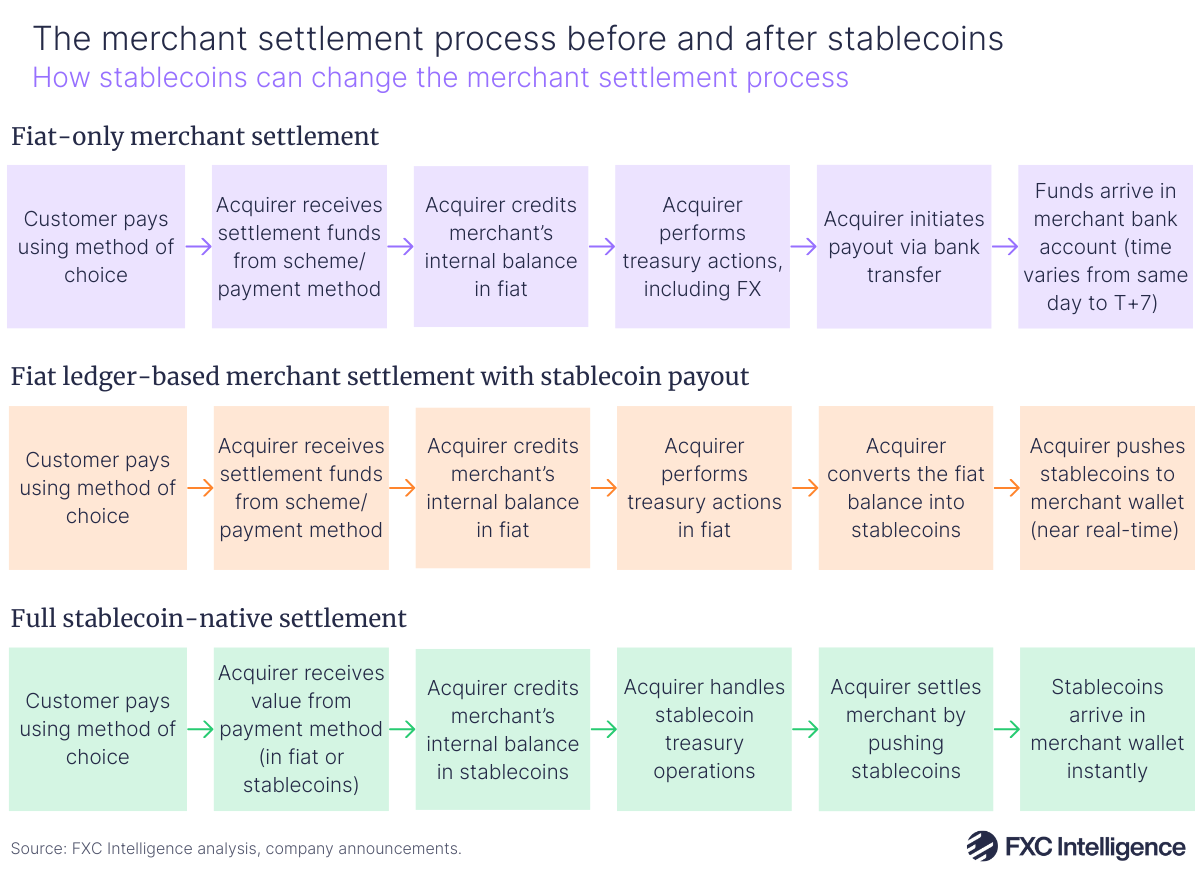
Start by identifying the participants. If you are building for B2B payments, your counterparties are likely other enterprises or financial institutions. In this scenario, the primary goal is often speed and finality. As McKinsey notes, stablecoins can be sent between wallet addresses without opening traditional bank accounts, bypassing the slow settlement cycles of legacy systems McKinsey. Your infrastructure must prioritize high throughput and low latency to compete with existing wire networks.
If your scope is treasury management or internal corporate accounting, the focus shifts to control and auditability. You need a system where only authorized internal wallets can interact with specific pools of capital. Here, privacy isn't about hiding transactions from the public, but restricting visibility to authorized participants within the organization. This ensures that sensitive pricing strategies or counterparty relationships remain confidential while still operating on a transparent, programmable blockchain.
For cross-border use cases, the stakes involve regulatory compliance across multiple jurisdictions. Your infrastructure must handle identity verification (KYC/AML) at the token level. Canton Network highlights that private stablecoins can "move freely, without exposing pricing, counterparties or strategies" while maintaining complete composability Canton Network. This programmable privacy allows you to settle internationally without exposing your firm's broader market position to competitors or the public chain.
Clarifying this scope early prevents costly architectural rework. It determines whether you need a permissioned ledger, a hybrid public-private chain, or a layer-2 solution with zero-knowledge proofs. Get the business logic right first; the technology will follow.
Select a regulated issuer and custodian
Private stablecoin infrastructure requires two distinct legal and technical partnerships: the issuer and the custodian. The issuer holds the license to mint and burn tokens, while the custodian secures the underlying reserves. Confusing these roles is a common compliance failure that can halt your entire operation.
The Issuer: Minting and Burning Authority
The issuer is the regulated entity authorized to create new tokens and redeem existing ones. In the United States, this typically means securing a money transmitter license (MTL) or a special purpose charter from a state regulator like the New York Department of Financial Services (NYDFS). Globally, you might look for an Electronic Money Institution (EMI) license under the EU’s EMD2 directive.
You cannot simply write a smart contract and call it an issuer. The issuer must maintain 1:1 backing in segregated, high-quality liquid assets. If you are building for a specific jurisdiction, you must align your tokenomics with that region’s reserve requirements. For cross-border solutions, you may need multiple issuer licenses to operate legally in each target market.
The Custodian: Securing the Reserves
While the issuer handles the legal minting, the custodian handles the cryptographic security of the fiat reserves and the private keys. You need a custodian that offers multi-party computation (MPC) or hardware security modules (HSMs) to prevent single points of failure.
Reputable custodians like Fireblocks or Ripple provide institutional-grade security that meets regulatory audits. They ensure that the assets backing your stablecoin are not commingled with the custodian’s own balance sheet. This segregation is non-negotiable for maintaining trust and passing compliance checks.
Comparison: Issuer vs. Custodian Roles
| Feature | Regulated Issuer | Institutional Custodian |
|---|---|---|
| Primary Function | Minting and burning tokens | Securing fiat reserves and keys |
| Regulatory Focus | Money Transmitter / EMI License | Trust Charter / SOC 2 Type II |
| Asset Control | Legal ownership of reserves | Cryptographic control of assets |
| Liability | Redemption obligations | Security breach liability |
Choosing the right partners involves more than just technical integration. It requires due diligence on their regulatory standing and their ability to scale with your user base.
Enterprise Security Hardware
For teams managing their own infrastructure, physical security keys are often the final layer of defense for administrative access.



As an Amazon Associate, we may earn from qualifying purchases.
Map the technical integration steps
Establishing a secure, compliant connection between your internal systems and the stablecoin rail requires a linear, auditable workflow. Think of this process as installing new plumbing behind the walls of your existing financial operations. The goal is to ensure that every token movement is authenticated, signed, and reconciled without disrupting your current compliance controls.
Follow this four-step sequence to establish a secure, compliant connection between your internal systems and the stablecoin rail.
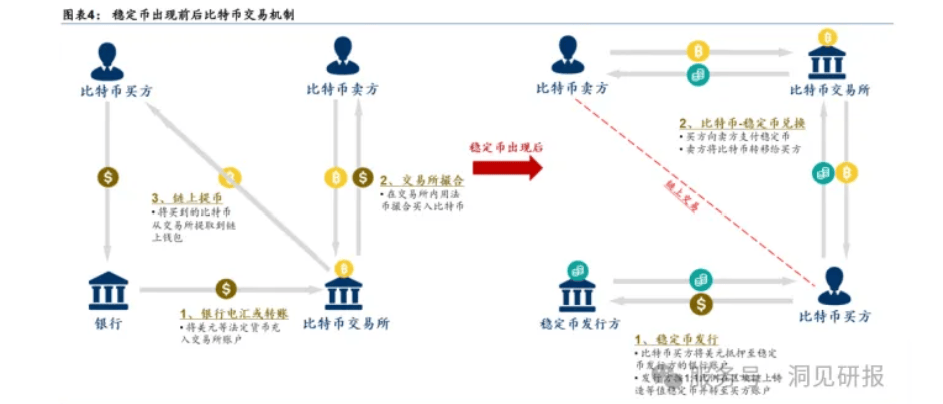
Begin by establishing a secure connection between your internal systems and the stablecoin provider’s API. This step involves configuring API keys, managing access tokens, and ensuring that your authentication protocol meets enterprise-grade security standards. Proper authentication prevents unauthorized access and ensures that only verified systems can initiate transactions, forming the foundation of your private stablecoin infrastructure.
Once authenticated, provision dedicated wallets for your business operations. These wallets must be configured to adhere to your internal compliance policies, including multi-signature requirements and address whitelisting. This step ensures that funds are segregated appropriately and that all incoming and outgoing stablecoin transfers are tracked within a controlled environment, reducing the risk of error or fraud.
Integrate a transaction signing mechanism that requires human or system approval before any stablecoin is moved. This step involves connecting your ERP or payment system to a signing service that validates transaction details against your business rules. By enforcing this check, you ensure that every payment is authorized by the correct personnel or automated workflows, maintaining integrity across your private stablecoin infrastructure.
Finally, implement an automated reconciliation process that matches on-chain transaction data with your internal accounting records. This step involves pulling transaction hashes and status updates from the blockchain to verify that payments have settled correctly. Regular reconciliation ensures that your financial reports are accurate and that any discrepancies are identified and resolved quickly, keeping your private stablecoin infrastructure compliant and reliable.
Implement compliance and audit controls
Private stablecoin infrastructure demands a compliance framework that satisfies both on-chain transparency and off-chain regulatory scrutiny. Unlike public networks where anonymity is the norm, private stablecoin operations must embed identity verification and continuous monitoring into the transaction lifecycle. This ensures that while the underlying ledger remains efficient, the system retains the ability to flag suspicious activity and enforce sanctions lists.
The foundation of this control layer is a robust KYC/AML program. Before any stablecoin is minted or transferred, participants must undergo rigorous identity checks. This involves verifying government-issued IDs, screening against global sanctions databases (such as OFAC), and assessing risk profiles based on transaction volume and counterparty history. For high-stakes financial operations, this process cannot be an afterthought; it must be integrated into the onboarding workflow to prevent illicit actors from entering the ecosystem.
Once users are onboarded, on-chain monitoring tools become the next line of defense. These tools analyze transaction patterns in real-time, detecting anomalies like rapid layering or interactions with known mixer services. By integrating these monitoring solutions directly into the stablecoin infrastructure, issuers can freeze funds or flag transactions for manual review before they settle. This proactive approach mitigates regulatory risk and protects the integrity of the payment rails.
To ensure your deployment meets these standards, use the following checklist to validate your compliance controls before launch.
Common Integration Mistakes
Even with a solid compliance framework, private stablecoin infrastructure can fail due to technical oversights. The most frequent pitfall is poor key management. If your custody solution doesn’t support multi-signature requirements or hardware security modules (HSMs), you expose the treasury to single points of failure. Treat private keys like physical vault keys: never store them in plain text or on a single connected server.
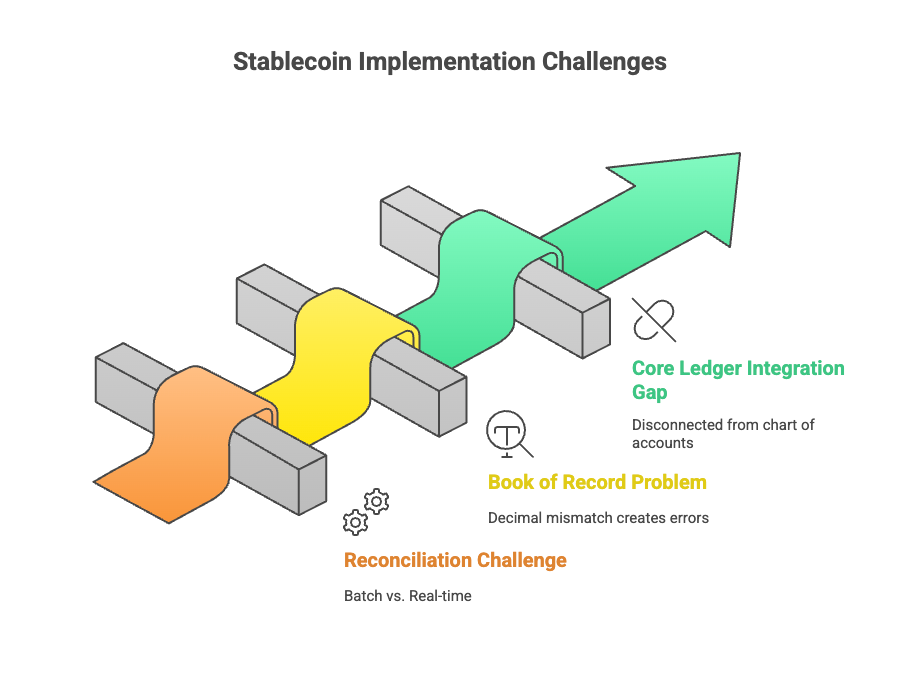
Liquidity fragmentation is another silent killer. When you split reserves across multiple chains or wallets without automated reconciliation, you risk insolvency on one ledger while funds sit idle on another. Stripe notes that stablecoin infrastructure must ensure reliable transfers and steady value maintenance. If your internal ledger doesn’t match the on-chain reality in real time, your business operations will stall.
Finally, avoid building custom settlement layers when standard APIs suffice. Many teams try to code their own bridge protocols to save costs, only to introduce latency and security holes. Use established providers for the heavy lifting. Focus your engineering efforts on the user experience and compliance logic, not on reinventing the backend plumbing that already exists.
No comments yet. Be the first to share your thoughts!