Why private stablecoins matter now
For years, the stablecoin narrative was dominated by retail users chasing yield and cross-border remittances on public chains. That era is ending. Institutions are no longer satisfied with the transparency of public ledgers, where every transaction is visible to the world. The shift toward private, permissioned stablecoins is driven by a simple requirement: the ability to move capital at settlement speed without exposing counterparty data or transaction details to public scrutiny.
Private stablecoins operate on permissioned rails or use zero-knowledge proofs on public chains to shield sensitive financial information. This privacy layer is not about hiding illicit activity; it is about protecting trade secrets, maintaining client confidentiality, and complying with strict data governance standards. As McKinsey notes, tokenized cash issued by private institutions is becoming the backbone for next-generation payments, enabling real-time settlement while keeping proprietary data private.
The infrastructure has matured to support this demand. Platforms like Canton Network now enable tokenized assets to move on-chain with the privacy needed for real capital markets and treasury operations. This is not a speculative trend; it is a structural upgrade to financial plumbing. Banks and large corporations need rails that function like traditional SWIFT transfers in speed but offer the programmability of blockchain, without the reputational risk of public ledger exposure.
This transition is reshaping the competitive landscape. Institutions are moving away from generic, public-facing stablecoins toward bespoke, permissioned tokens that integrate directly with existing ERP and treasury systems. The result is a more efficient, compliant, and confidential payment ecosystem that aligns with the operational realities of modern finance.
Core infrastructure components
Private stablecoin infrastructure is not just a wallet; it is a specialized operating system designed for institutional scale. Unlike retail solutions that prioritize ease of use, institutional issuance engines must handle complex compliance layers, multi-chain liquidity routing, and audit-ready reporting. The goal is to create a payment rail that functions with the reliability of traditional banking but retains the programmability of blockchain.
At the heart of this stack is the issuance engine. This component manages the minting and burning of tokens, ensuring that every digital unit is backed by real-world reserves. Vendors like Fireblocks provide the smart contract support and lifecycle tooling necessary to deploy these assets across multiple blockchains. This multi-chain capability is essential for institutions that need to settle transactions on the most efficient network for each specific use case, whether it is Ethereum for complex DeFi interactions or Solana for high-throughput payments.
The compliance layer acts as the gatekeeper. Institutional clients require automated sanctions screening and identity verification before any transaction can settle. This layer integrates with traditional banking rails to ensure that fiat on-ramps and off-ramps remain compliant with local regulations. Without this integration, private stablecoins cannot achieve the trust required for enterprise adoption.
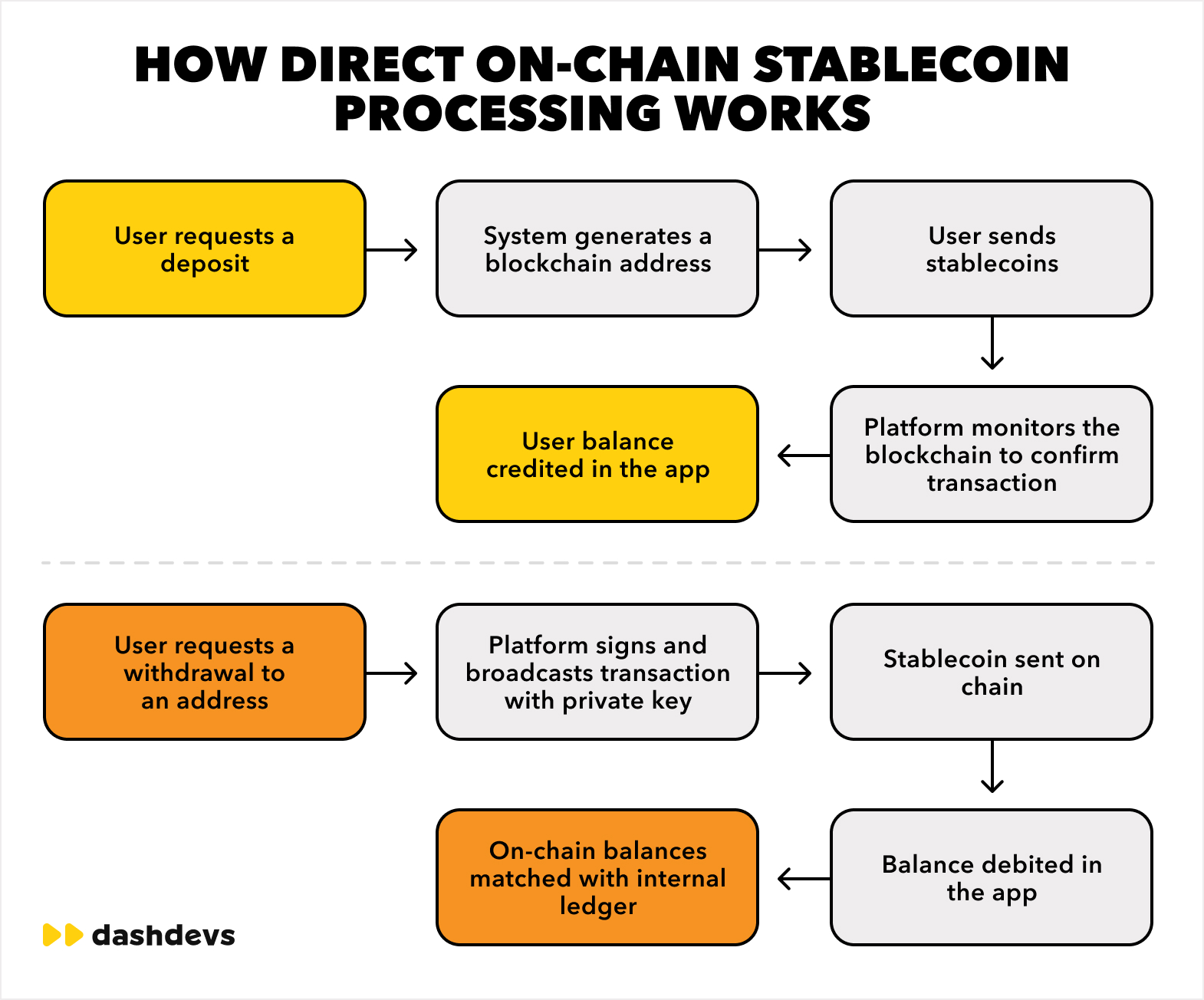
Stability is maintained through a combination of algorithmic controls and reserve management. The infrastructure must monitor the peg in real-time and execute corrective actions if deviations occur. This requires robust monitoring tools that can detect anomalies before they impact the broader market. As noted by Stripe, the infrastructure must maintain steady value and reliable transfers to function effectively for businesses.
Leading private stablecoin tools
Institutional adoption of private stablecoins relies on specialized infrastructure that balances regulatory compliance with transactional efficiency. Unlike retail-focused solutions, these platforms are engineered for high-volume settlement, strict identity verification, and data privacy within permissioned or hybrid environments.
The market has consolidated around a few key vendors that offer end-to-end lifecycle management. These tools handle everything from token issuance and smart contract deployment to audit-ready reporting and interoperability across public and private ledgers.
Fireblocks
Fireblocks provides a secure infrastructure layer for issuing and managing stablecoins across multiple blockchains. Their platform focuses on smart contract support and lifecycle tooling, ensuring that institutions can deploy assets with audit-ready reporting capabilities. This approach is particularly valuable for treasury operations requiring granular control over asset movement and compliance verification. Fireblocks Stablecoin Infrastructure
Canton Network
Canton Network enables private stablecoin payments on public blockchains, allowing institutions to tokenize and move on-chain cash while maintaining necessary privacy. This architecture supports real capital markets and treasury use cases by keeping sensitive transaction data off the public ledger while still benefiting from the liquidity of public chains. It is a prime example of hybrid infrastructure designed for complex financial workflows. Canton Network Private Stablecoins
Stripe
Stripe offers a comprehensive guide and infrastructure for businesses looking to integrate stablecoin payments. Their focus is on maintaining steady value, reliable transfers, and seamless integration with existing payment systems. By abstracting the complexity of blockchain technology, Stripe allows traditional businesses to accept and settle in stablecoins without managing private keys or node infrastructure directly. Stripe Stablecoin Guide
Comparison of Infrastructure Providers
The following table compares the core capabilities of leading private stablecoin infrastructure providers. Each platform serves slightly different institutional needs, from pure custody to hybrid ledger solutions.
| Provider | Primary Focus | Privacy Model | Integration Style |
|---|---|---|---|
| Fireblocks | Secure issuance & lifecycle | Audit-ready reporting | API & SDK |
| Canton Network | Cross-chain capital markets | Private data on public chains | Protocol-level |
| Stripe | Business payment acceptance | Standard compliance | Payment gateway |
Essential Infrastructure Gear
For teams building or testing private stablecoin environments, having the right hardware and security tools is critical. The following products are commonly used by developers and operations teams to secure keys and manage node infrastructure.


As an Amazon Associate, we may earn from qualifying purchases.
Private stablecoins are moving from pilot to production
The conversation around stablecoins has shifted. What was once a retail speculation tool is now being rebuilt as core financial plumbing. For institutions, the focus is no longer on the public, transparent ledgers that dominate retail trading. It is on private, permissioned infrastructure that offers the speed of blockchain with the compliance controls required by regulators and auditors.
Major financial players are no longer testing the waters. They are building the pipes. Barclays, Morgan Stanley, and others are integrating stablecoin technology not to create new consumer products, but to modernize the backend of financial settlement. This is about reducing the friction in cross-border payments, collateral management, and repo markets. The goal is real-time settlement with low transaction costs, integrated directly into existing programmable infrastructures.
The trajectory for 2026 is clear: private stablecoins will serve as the bridge between traditional finance and digital asset efficiency. They allow institutions to move value at the speed of the internet while maintaining the regulatory guardrails that prevent systemic risk. This is not about replacing fiat; it is about making fiat more efficient.
To understand the scale of this shift, it helps to look at the broader market context. While private infrastructure operates in the background, the public stablecoin market continues to grow, providing a useful benchmark for liquidity and adoption trends.
No comments yet. Be the first to share your thoughts!