Why private rails matter now
Public stablecoins have solved the problem of accessibility, but they haven’t solved the problem of discretion. For institutional players, the open nature of blockchains like Ethereum is a liability, not a feature. Every transaction is visible to anyone with a blockchain explorer, creating a compliance nightmare for entities that need to protect counterparty privacy while adhering to strict regulatory frameworks. This is where private stablecoin infrastructure steps in, offering a controlled environment that public rails simply cannot provide.
The business case rests on three pillars: privacy, compliance, and speed. Public networks force institutions to choose between regulatory transparency and commercial confidentiality. Private rails allow for "controlled visibility," where auditors and regulators can see the ledger, but competitors and the general public cannot. This distinction is critical for high-value settlements, interbank transfers, and supply chain finance, where revealing transaction volumes or counterparties could impact market positioning.
Beyond privacy, private infrastructure enables real-time settlement that rivals traditional correspondent banking but without the days-long lag. As noted by Morgan Stanley, stablecoins integrated into programmable infrastructures offer real-time settlement and low transaction costs, effectively modernizing the financial backbone. McKinsey adds that these tokenized cash systems allow value to move directly between wallet addresses without requiring intermediaries to open new accounts, streamlining the entire payment lifecycle.
For finance professionals, the shift isn’t just about technology; it’s about risk management. By moving critical settlement layers to private rails, institutions can isolate their operations from the volatility and public scrutiny of open markets while retaining the efficiency benefits of blockchain technology. This isn’t a rejection of public crypto; it’s a maturation of how financial infrastructure should operate for serious capital.
Core components of the stack
Building private stablecoin infrastructure requires more than just deploying a token contract. It demands a layered architecture that handles the entire lifecycle of the asset, from issuance to settlement. According to Stripe, this infrastructure is the set of systems that keep stablecoins functioning by maintaining steady value, reliable transfers, and regulatory adherence.
Custody and Reserve Management
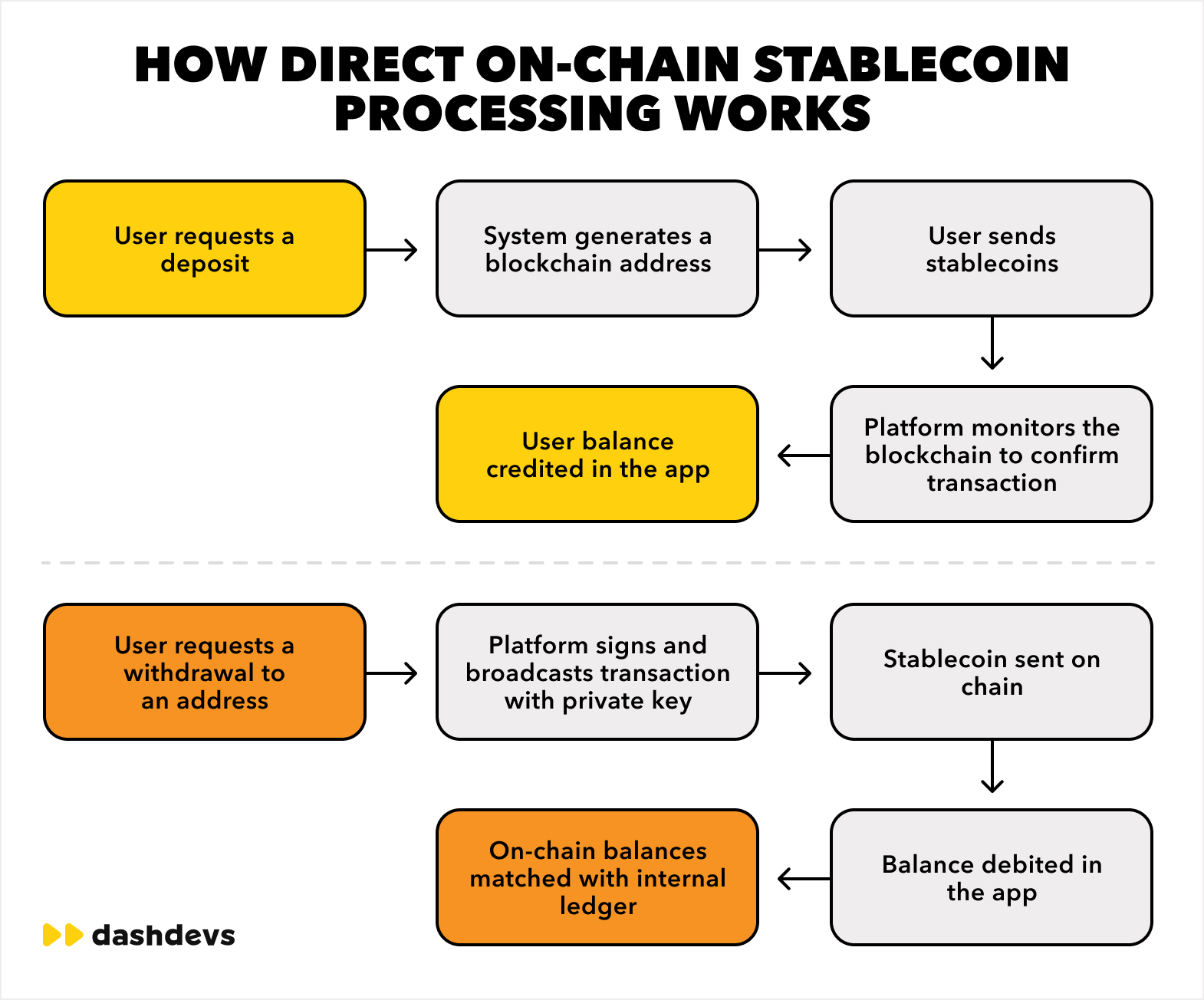
Secure custody is the foundation of trust in private stablecoin infrastructure. Institutions must choose between multi-signature wallets, institutional-grade custodians, or hybrid models that balance control with security. Reserves must be held in high-quality liquid assets, typically short-term U.S. Treasuries or cash equivalents, to ensure redemption stability.
Issuance and Redemption Rails
The issuance layer connects the blockchain to traditional banking systems. This involves creating smart contracts that mint tokens upon receipt of fiat deposits and burn them during redemption. Bridge notes that this layer requires robust integration with payment processors to handle large-volume settlements without latency or failure.
Compliance and Identity Verification
Private stablecoins operate within strict regulatory frameworks. The compliance layer integrates Know Your Customer (KYC) and Anti-Money Laundering (AML) checks directly into the issuance process. This ensures that only verified participants can hold or transfer the stablecoin, reducing the risk of illicit activity and aligning with evolving global standards.
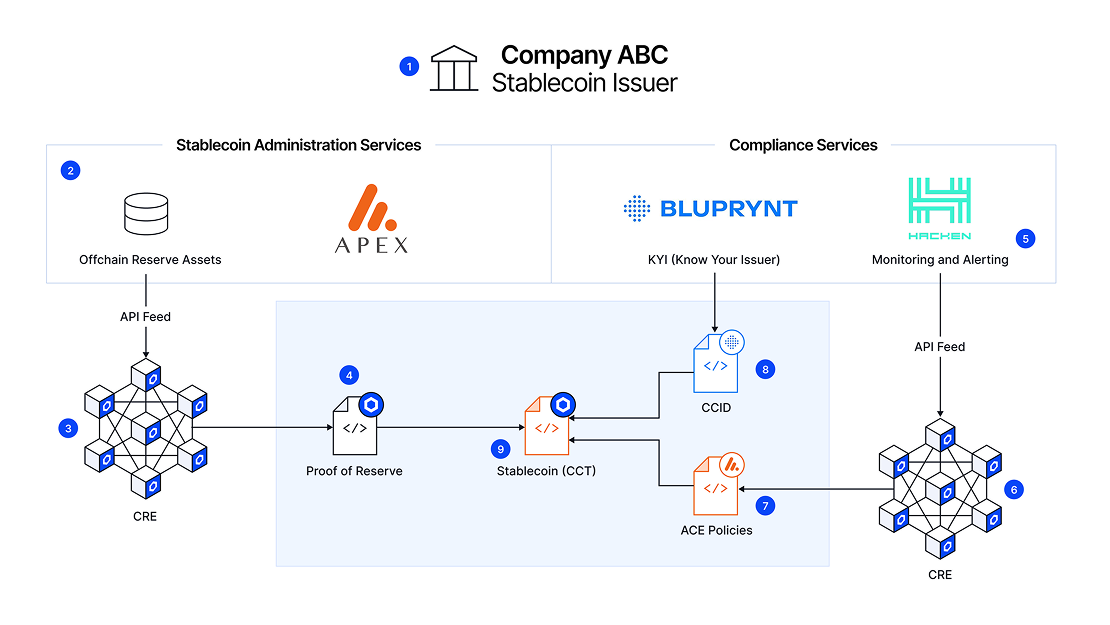
The stability of private stablecoin infrastructure relies on the seamless interaction of these layers. A failure in custody compromises security, while weak compliance invites regulatory action. By integrating these components from the start, institutions can build a resilient system capable of handling the demands of modern digital finance.
Leading infrastructure providers
Building private stablecoin infrastructure requires more than just a blockchain; it demands a secure, compliant rail for value transfer. Enterprise-grade platforms solve this by combining institutional custody with programmable privacy, allowing banks and asset managers to issue tokens without exposing sensitive counterparty data or pricing strategies to the public ledger.
Providers like Fireblocks and Canton Network have emerged as critical partners in this space. Fireblocks focuses on real-time settlement, cutting out traditional intermediaries to enable 24/7 cross-border transactions. Meanwhile, Canton Network offers "programmable privacy," ensuring that while stablecoins move freely on public blockchains, the underlying trade details remain confidential. This balance of composability and secrecy is what makes private stablecoin infrastructure viable for high-stakes finance.
The following comparison outlines how these leading platforms stack up against one another in terms of privacy, compliance, and target audience.
| Provider | Privacy Model | Supported Chains | Compliance Tools | Target Audience |
|---|---|---|---|---|
| Fireblocks | Transaction-level encryption | Multi-chain (EVM, Solana, etc.) | Integrated AML/KYC screening | Institutions & Exchanges |
| Canton Network | Programmable data visibility | Interoperable (Cosmos ecosystem) | Granular access controls | Banks & Asset Managers |
| Bridge | Layered architecture | Multi-chain focus | Reserve & custody integration | DeFi & Traditional Finance |
Selecting the right provider depends on your specific regulatory environment and technical stack. Fireblocks is often the go-to for institutions needing robust custody and broad chain support. Canton Network appeals to those prioritizing granular data privacy and interoperability across different blockchain ecosystems. Bridge offers a comprehensive view of the infrastructure layers, from blockchains to compliance, making it a strong option for hybrid models.
For teams looking to implement these tools, the right hardware and software resources are essential. The following recommendations highlight essential gear for setting up a secure private stablecoin infrastructure.


As an Amazon Associate, we may earn from qualifying purchases.
Private stablecoin infrastructure usage grows
Private stablecoin infrastructure is shifting from experimental pilots to core B2B payment rails. The market is moving faster than traditional correspondent banking because these tokens settle on-chain without requiring the recipient to hold a bank account. This structural advantage is why major financial institutions are treating stablecoins as a foundational layer for modern liquidity management.
McKinsey highlights that stablecoins enable direct transfers between blockchain-based wallet addresses. This removes the friction of opening and maintaining traditional financial institution accounts for every transaction. For treasury teams, this means capital can move instantly across borders, bypassing the legacy SWIFT delays that often plague international B2B settlements.
Barclays Private Bank describes this as a new generation of financial infrastructure. By pegging value to fiat assets, private stablecoins offer the predictability of traditional currency with the speed of digital assets. This combination is driving adoption in sectors where cross-border speed and lower transaction costs are critical competitive advantages.
No comments yet. Be the first to share your thoughts!